
Dispatches from the Eighth Grade Trip 2026
Our soon-to-be graduates have begun packing in so many events (and memories) in their final days at Speyer and last week, it was the annual Eighth Grade Washington, D.C. trip! Yes, it seems every Spring, almost every eighth grader on the East Coast makes their way to our nation's capital. Our oldest Dragons are bused from here to there (and back), and they pack in visits to the Smithsonian and Holocaust Memorial Museums, the Lincoln, Vietnam War, Jefferson, and Martin Luther King, Jr. memorials, Arlington National Cemetery, the National Archives, the Capital Building, and more in just three days (oh, don't forget the ghost tour of Historic Alexandria)! Here with all the exciting details from the trip is Mr. Deards:
DAY ONE
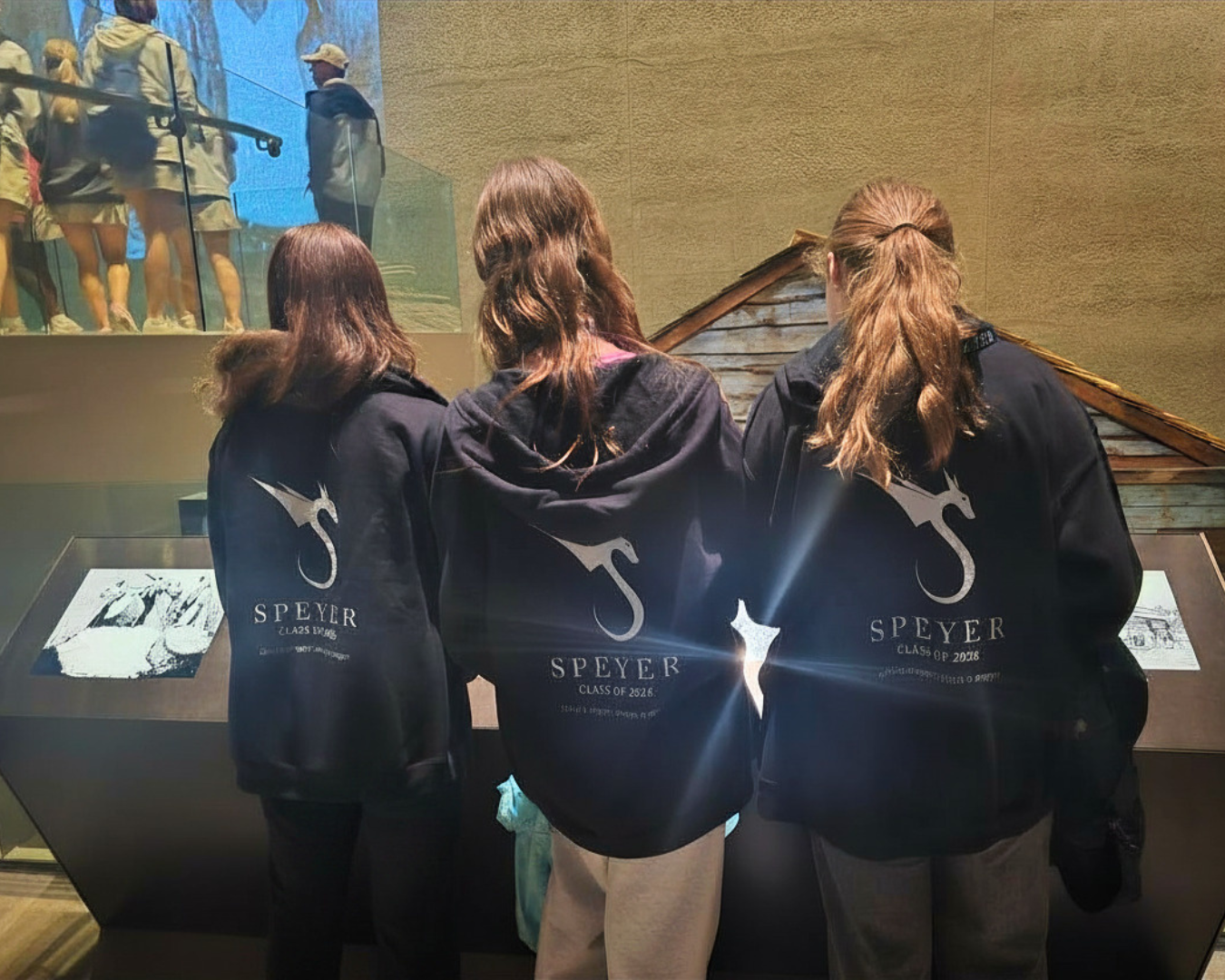
On arrival in D.C., we went to the National Mall, where we ate a picnic lunch before spending time in the Smithsonian Natural History Museum. We then walked to the Museum of African American History and Culture. This is an important place. I wish we’d had the two days it takes to really explore and inhale it.
Our visit was sadly short, but we were able to spend time in the historical area with severe galleries that describe the institution of slavery and its arrival in North America, the Revolution and creation of the Constitution (which allowed the continuation of the institution), the run-up to the Civil War, Reconstruction, and Civil Rights. I was impressed by the seriousness the students showed as they reprocessed much of the curriculum for the year but saw it amplified and deepened with additional data and vivid artifacts. They were saddened to note that Thomas Jefferson had enslaved children, and several choose to file by the casket of Emmett Till to pay their respects.
Our evening tour took us to three important monuments. First, we visited the austere and hauntingly beautiful Korean War Memorial. There are 19 statues (38 when reflected in the etched wall), and the statement “Freedom Is Not Free” is strong. It was gloomy and raining, which matched the attire and mood of the soldiers honored. We then heard about the design of the Vietnam War Memorial (the designer was a college student, and the project got a B!) before walking slowly past it. Our last visit was to the Lincoln Memorial. We saw the spot where Dr. King gave the “I Have A Dream” speech. Several students investigated the theory (shared by our guide) that John Wilkes Booth’s face can be seen if Lincoln is observed in profile, and they found it to be true.
DAY TWO
Our planned visit to Arlington National Cemetery had to be recalibrated as a very, very distant cousin of mine (King Charles) was also visiting. However, our tour guide organized the transition well. We went, en route, to see the US Air Force Memorial, which is a soaring tribute to birds, to the Wright Brothers, and to the human desire to fly.
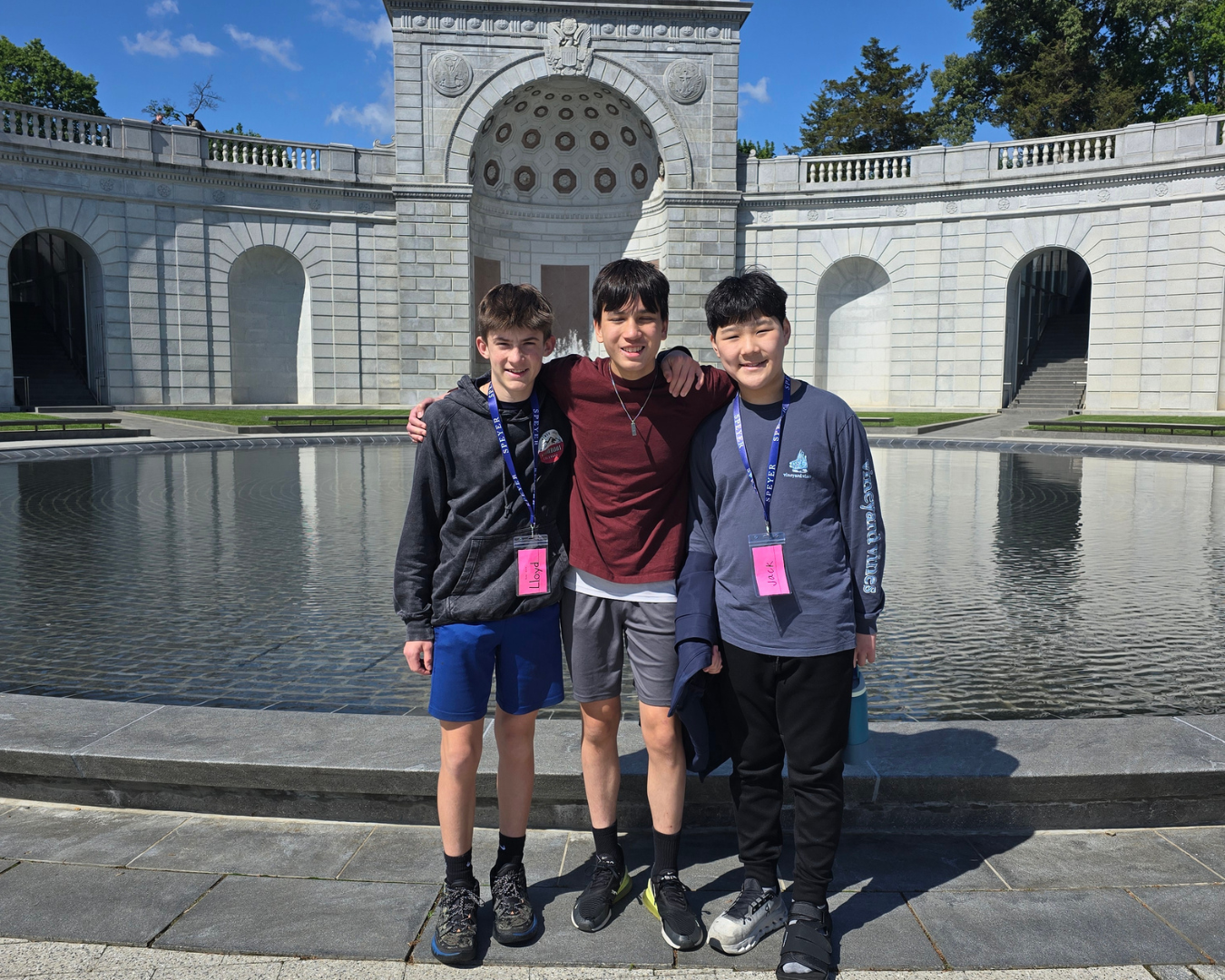
The children were surprised and rather intrigued to learn that Arlington National Cemetery (now close to full) was the home and plantation of the strongest military tactician (but possibly weakest strategist) of the Civil War, Robert E Lee. Lincoln offered him the position of head of the Union armies on Day One (it took Grant three years to earn such a posting), but Lee was a Virginian before he was an American. We began a thoughtful journey that allowed us to pay our respects to several people we had encountered or will encounter in our studies. We saw the graves of Robert and John F Kennedy. We spent a few minutes just looking at some gravestones and wondering about those who had served their country.
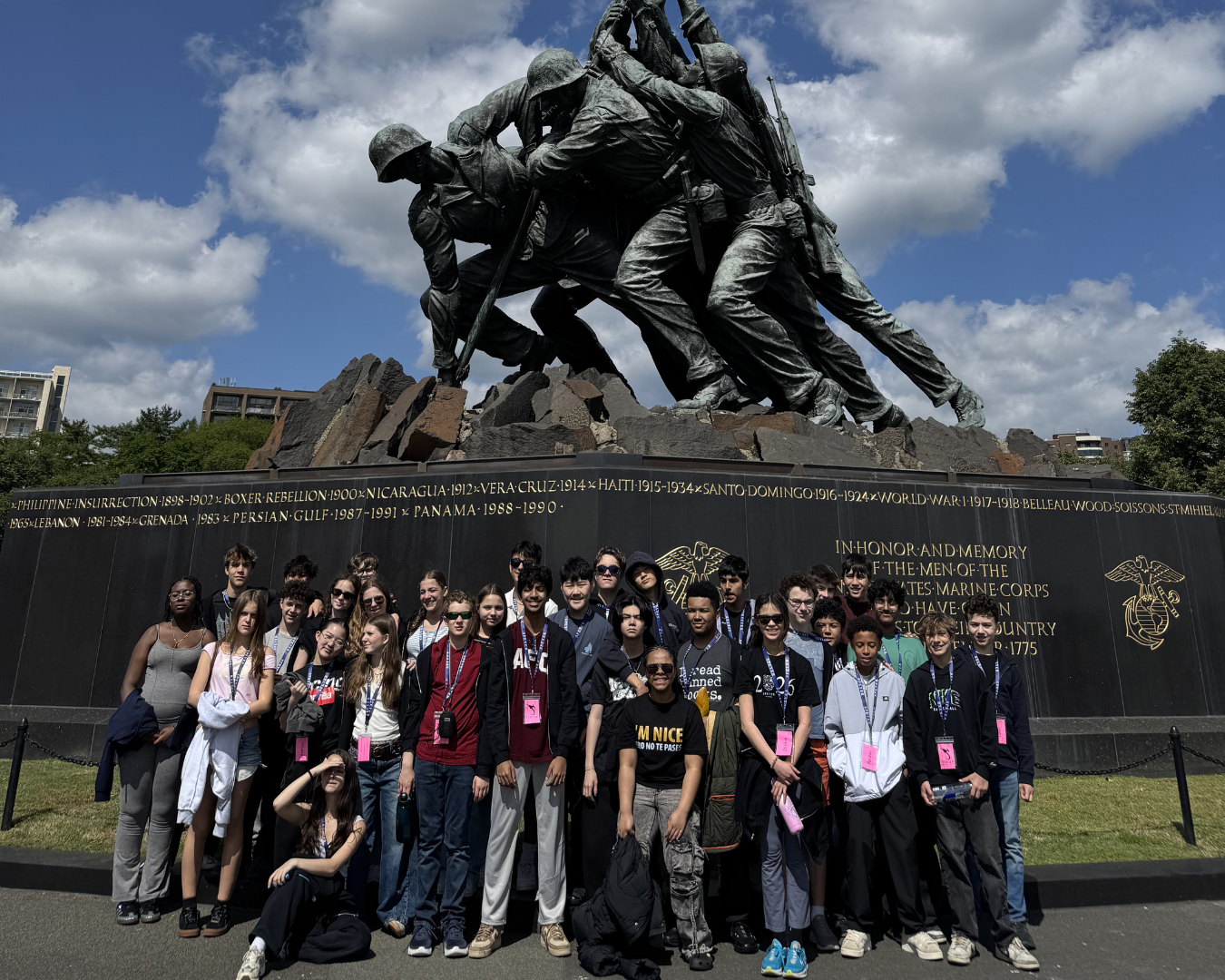
After Arlington, we walked to the Iwo Jima monument, which memorialized the moment that the U.S. flag was raised.
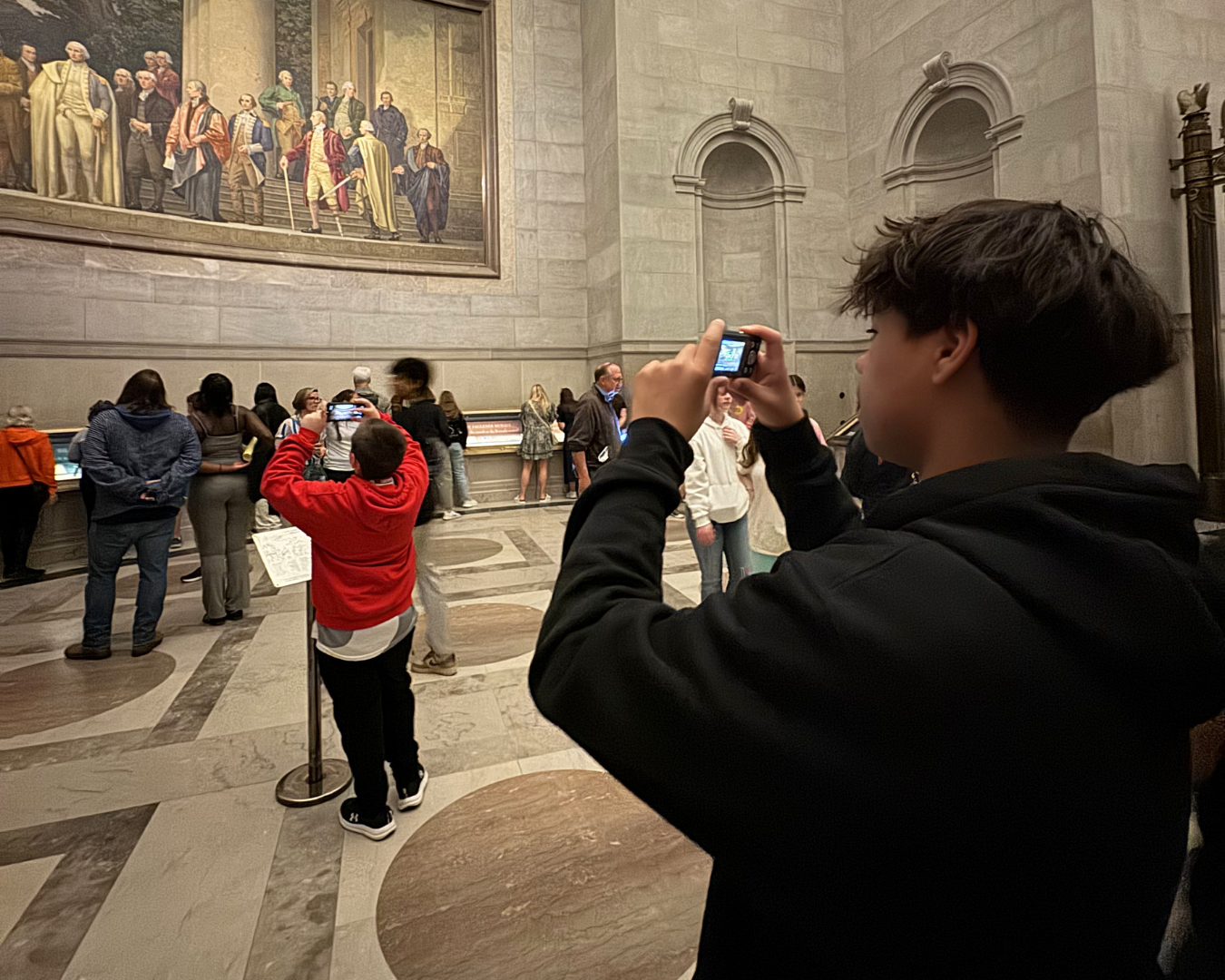
Our next port of call (and yes, this was a LOOOONG day) was the National Archives (motto: “The price of freedom is eternal vigilance.") We saw the biggies. There was the Declaration of Independence (“We hold these truths to be self-evident”), the Constitution (an unthinkably brief FOUR PAGES long, containing the entire mechanics of democracy and still, seemingly, humming), and the Bill of Rights The students swarmed and clicked their cameras (flashes dutifully off). I wonder if they were moved. I always am.
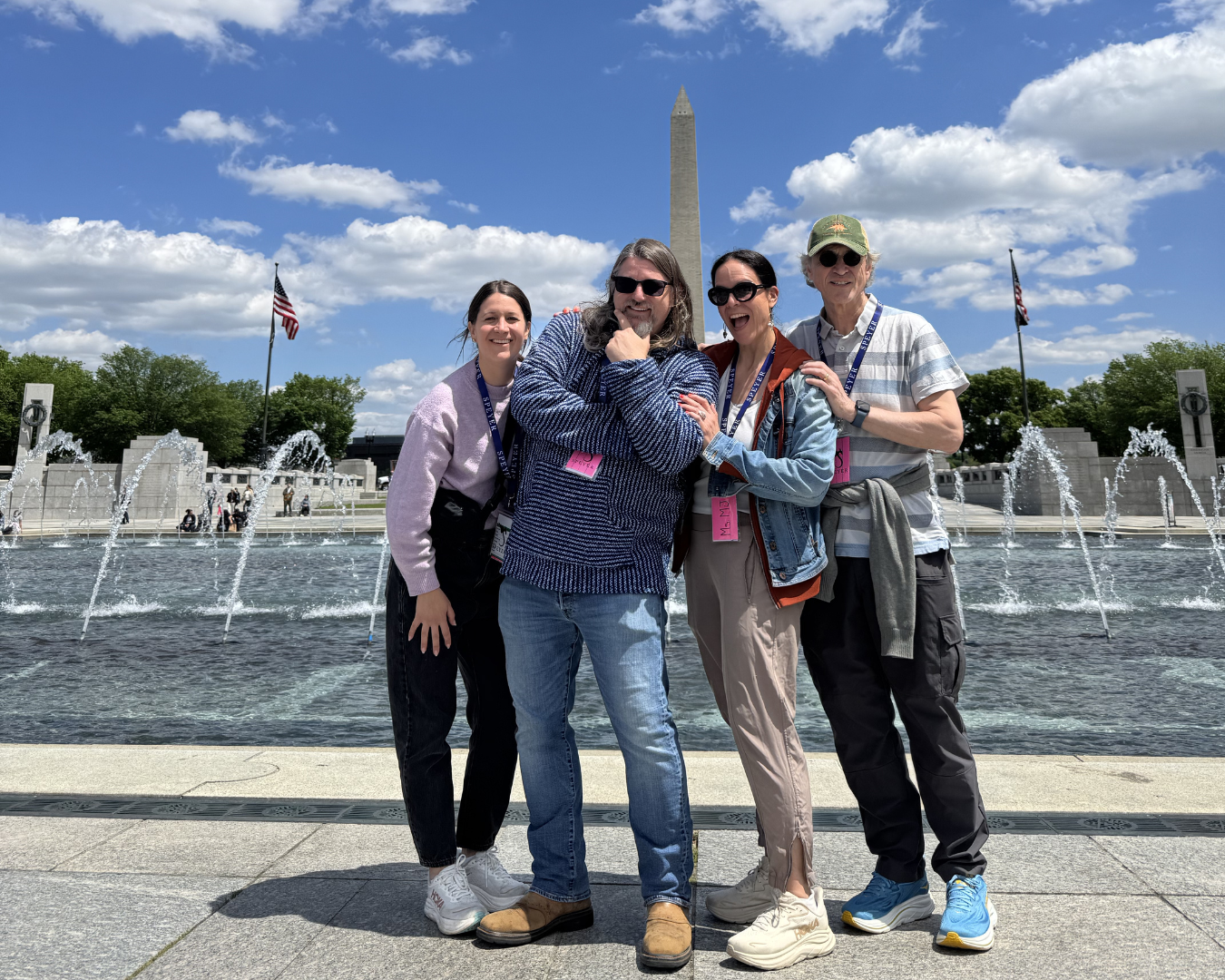
We were then able to squeeze in a brief sojourn at the World War II Memorial. It is a beautiful site with an Atlantic and Pacific side.
Then we took a tour of the United States Holocaust Memorial Museum. This is an austere and profound experience. We gave your children one and a half hours to investigate it, and they used every minute of the time. As we rode the elevator to the top floor, we heard a brief movie of the reactions of the Allied troops as they encountered concentration camps and could not believe what they were seeing. We saw a quote from General Dwight Eisenhower, who made it his business to witness a camp so that he could refute anyone who described the Holocaust as “propaganda.” You should ask your child what they made of it, but we saw one sad thing: among the towns in Germany where centuries of Jewish life were destroyed, was the town of Speyer, once a foremost center of Jewish learning.
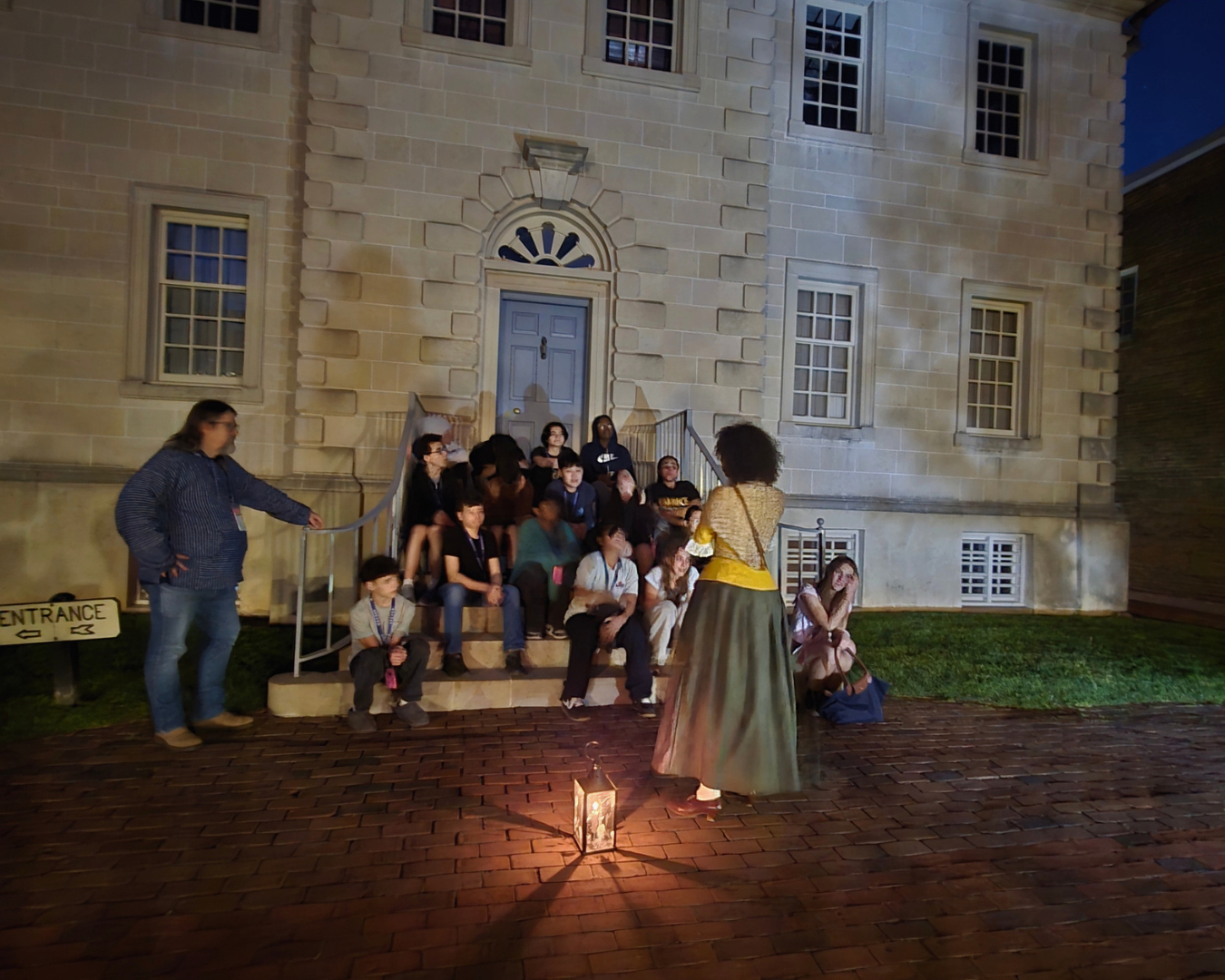
We then went to Historic Alexandria for an encounter with the surreal. We engaged in a Ghost Walk. And this skeptical educator was quite enchanted and occasionally frightened by the evening. An appropriately attired guide began by explaining the history of public hangings, war, and disease, and took us to several sites, including a cemetery, a tavern with a “Room 8” (with several notorious deaths and weird candle incidents), and George Washington’s townhouse (now an AirBnB where visitors sometimes report hearing the neigh and knickering of Washington’s horses). We then scurried back to the bus. Was it because we were tired and wanted to get tucked up in bed at our hotel? Or were we, just a little, afraid of the spirits?
DAY THREE
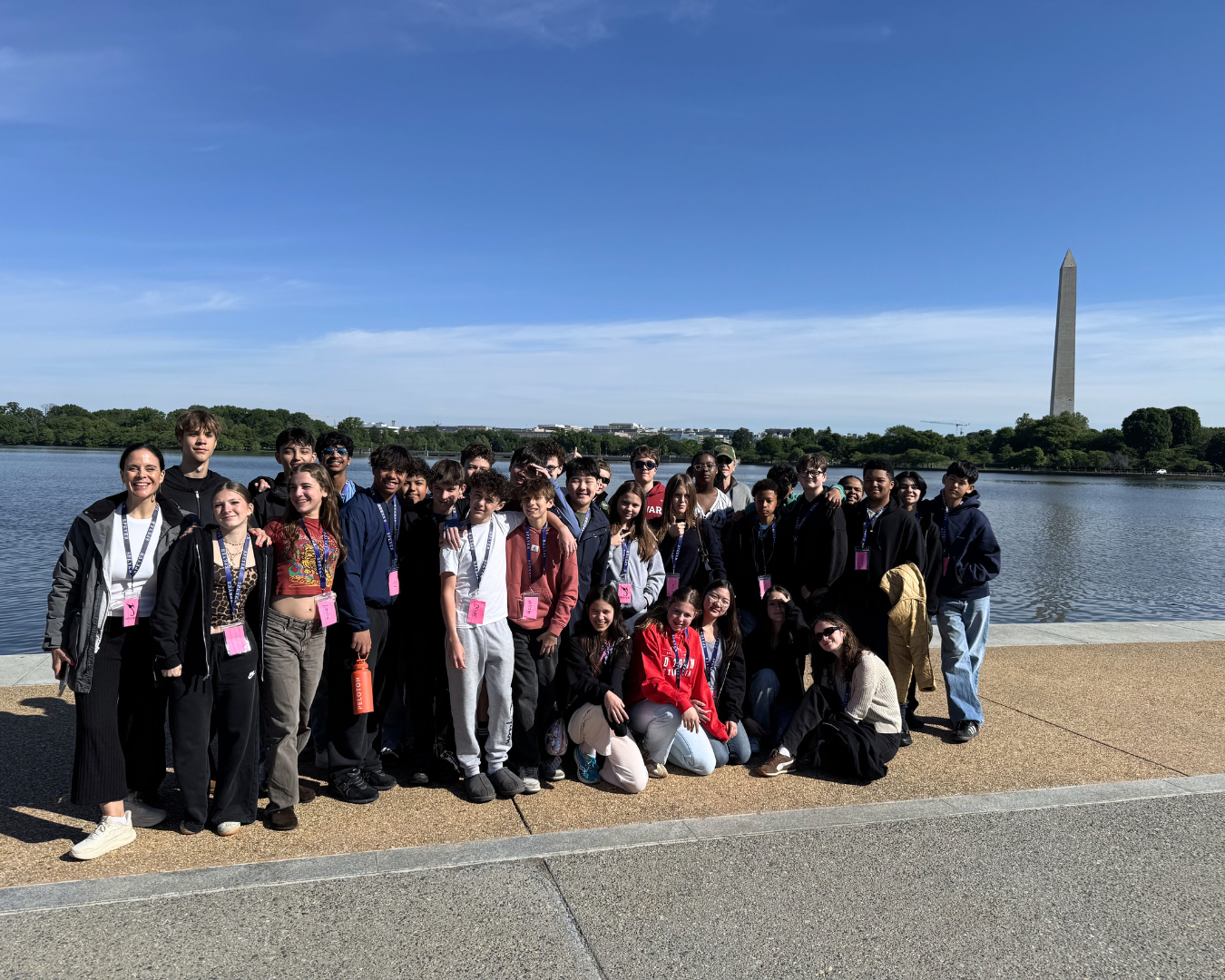
Our morning began at the Tidal Basin with the Jefferson Memorial. It is, in many ways, a serene and deceptively simple space. We see Jefferson gazing out across the water, marble and symmetry doing their quiet work. We spoke a little about the tension in Jefferson himself: the author of soaring ideals about liberty, and a man who lived in profound contradiction with them. The students, as ever, were quick to see both sides.
We then rode to the Martin Luther King, Jr. Memorial, which feels entirely different. It is more dynamic, more urgent. The great stone figure emerges from the “mountain of despair,” and the surrounding quotations form a kind of moral chorus. The statue was originally criticized for its unfinished nature. But, perhaps, it is an appropriate tribute to the ongoing work in support of Civil Rights. Your children moved through it thoughtfully, reading, pausing, occasionally photographing lines that struck them. It is a place that asks something of you.
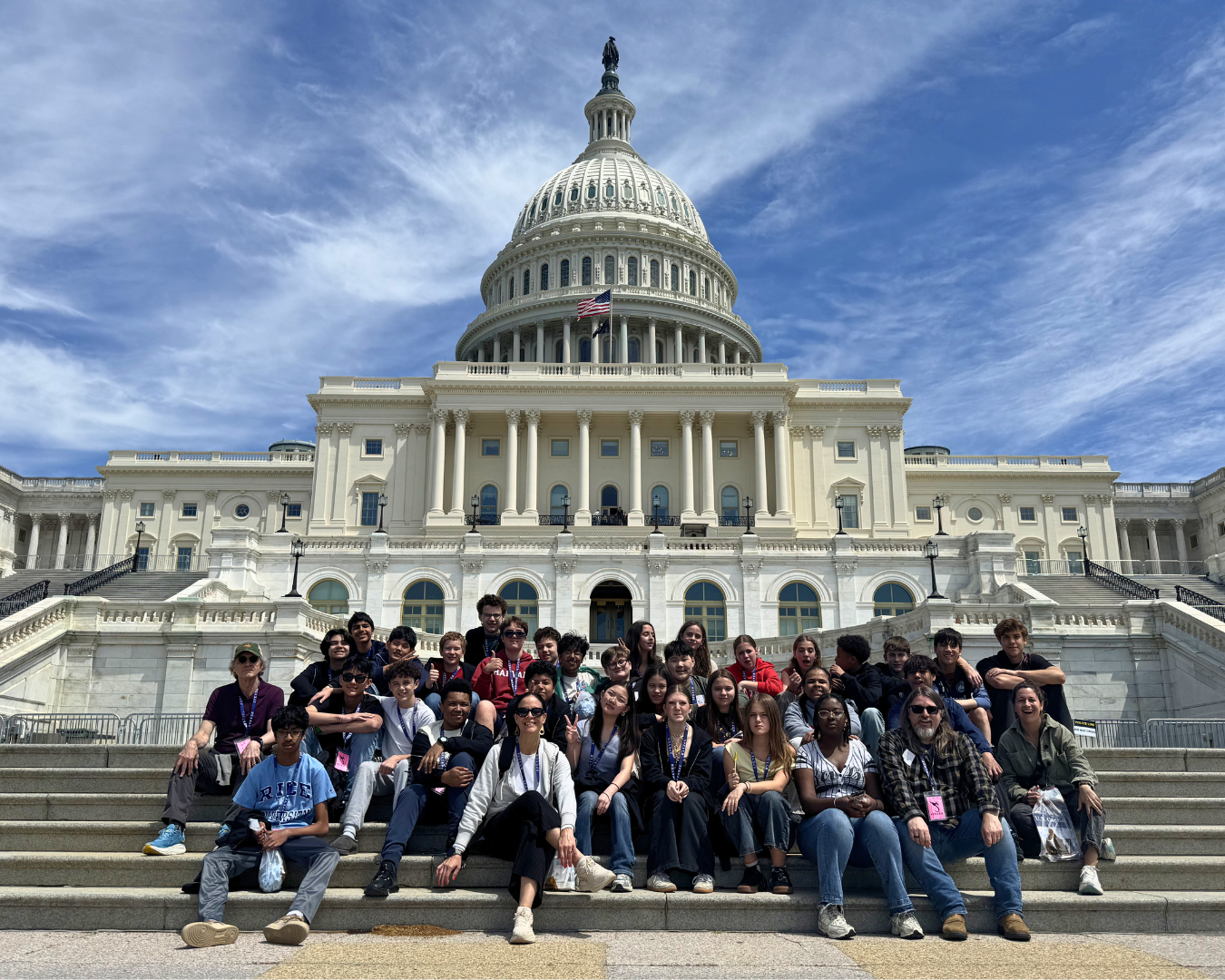
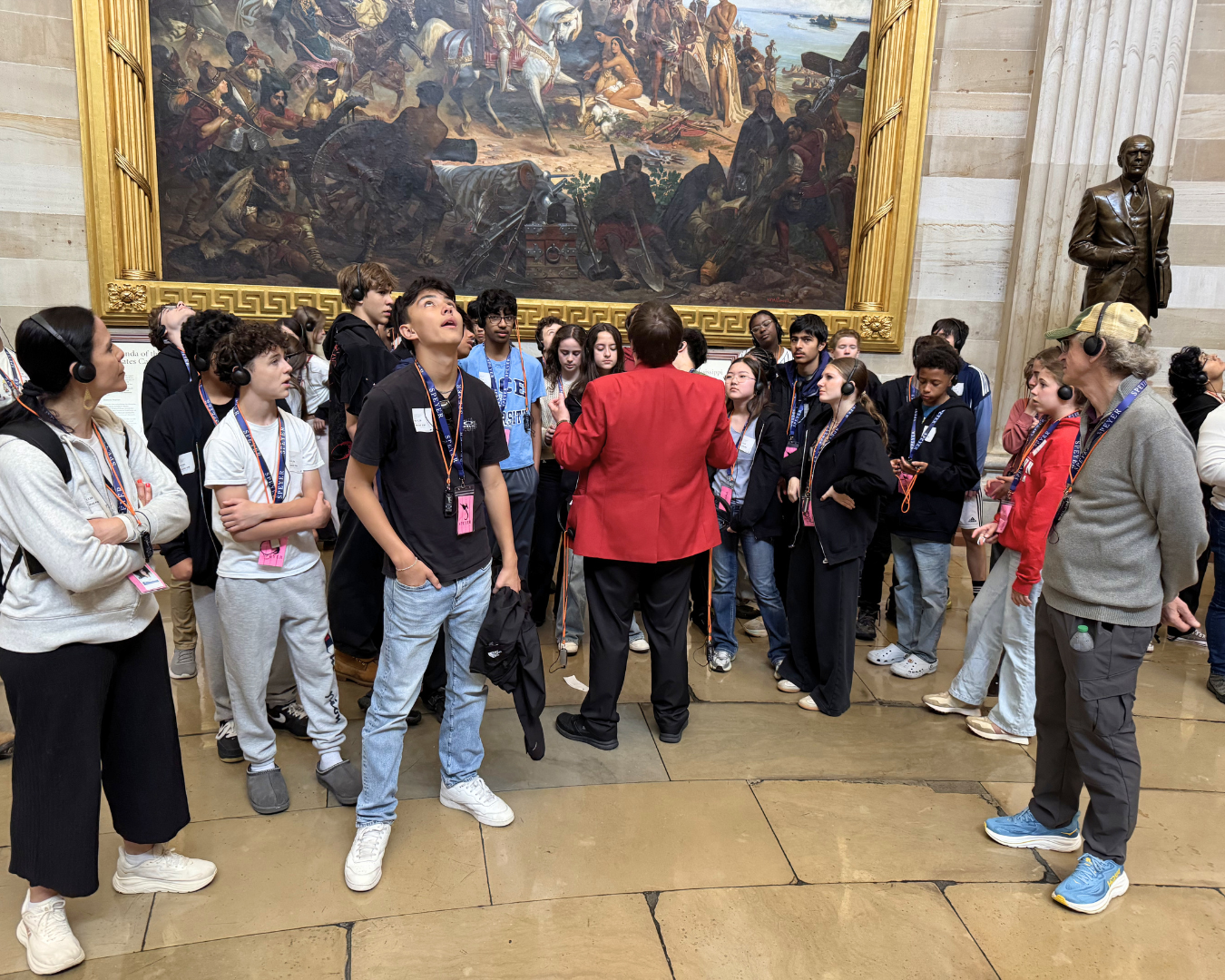
After a well-earned lunch at the Capitol Café (which, for this correspondent, was a disappointing black bean burger and a blondie to die for), we entered the Capitol itself. This is, of course, the epicenter of American government, though it also occasionally feels like a museum, a cathedral, and a construction site all at once. We began with a film, earnest, sweeping, and unapologetically patriotic, and then moved into a guided tour. We stood beneath the great dome and looked up at Brumidi’s Apotheosis of George Washington, which remains one of the more surreal artistic choices in the American canon: Washington ascending, quite literally, into the heavens.
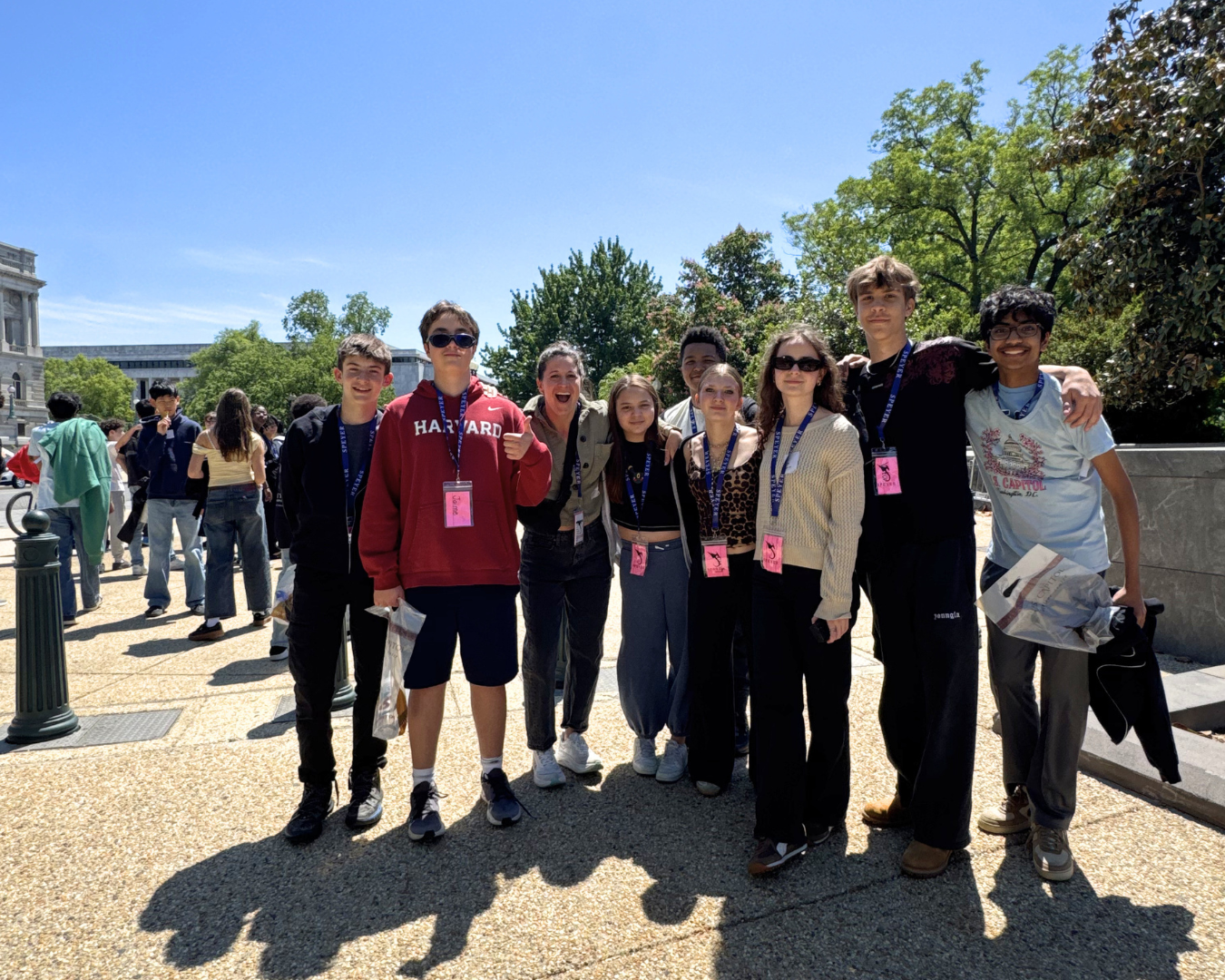
We learned about the building’s long and occasionally turbulent history (including its destruction at the hands of British troops in 1814 and its subsequent rebuilding), and about its status, at the time of its construction by mostly enslaved labor, as the largest building in North America, a physical statement of ambition as much as governance. We walked past the Library of Congress and the Supreme Court before looping back around the Capitol Building for one final photo.
We thank Mr. Deards for his illuminating work as a Speyer Correspondent, and to all of the Ms. MJ, Nurse Allyce, Mr. Blackman who made this trip possible. Our Speyer students continue to cultivate both intellect and integrity inside 925 9th Ave and beyond.