Speyer Honors the Legacy of Dr. Martin Luther King, Jr. with Our Fourth Annual Silent March and Assembly!
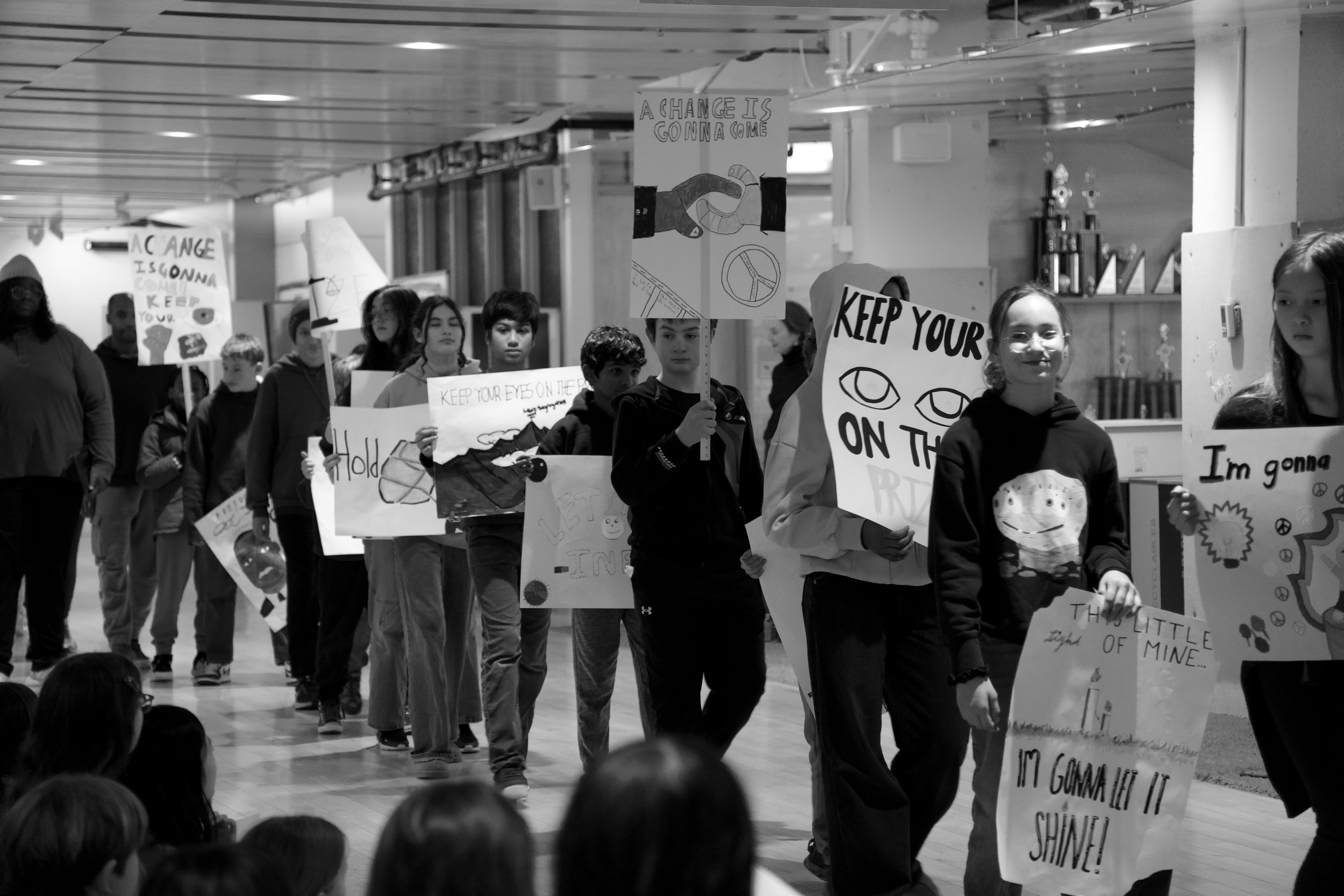
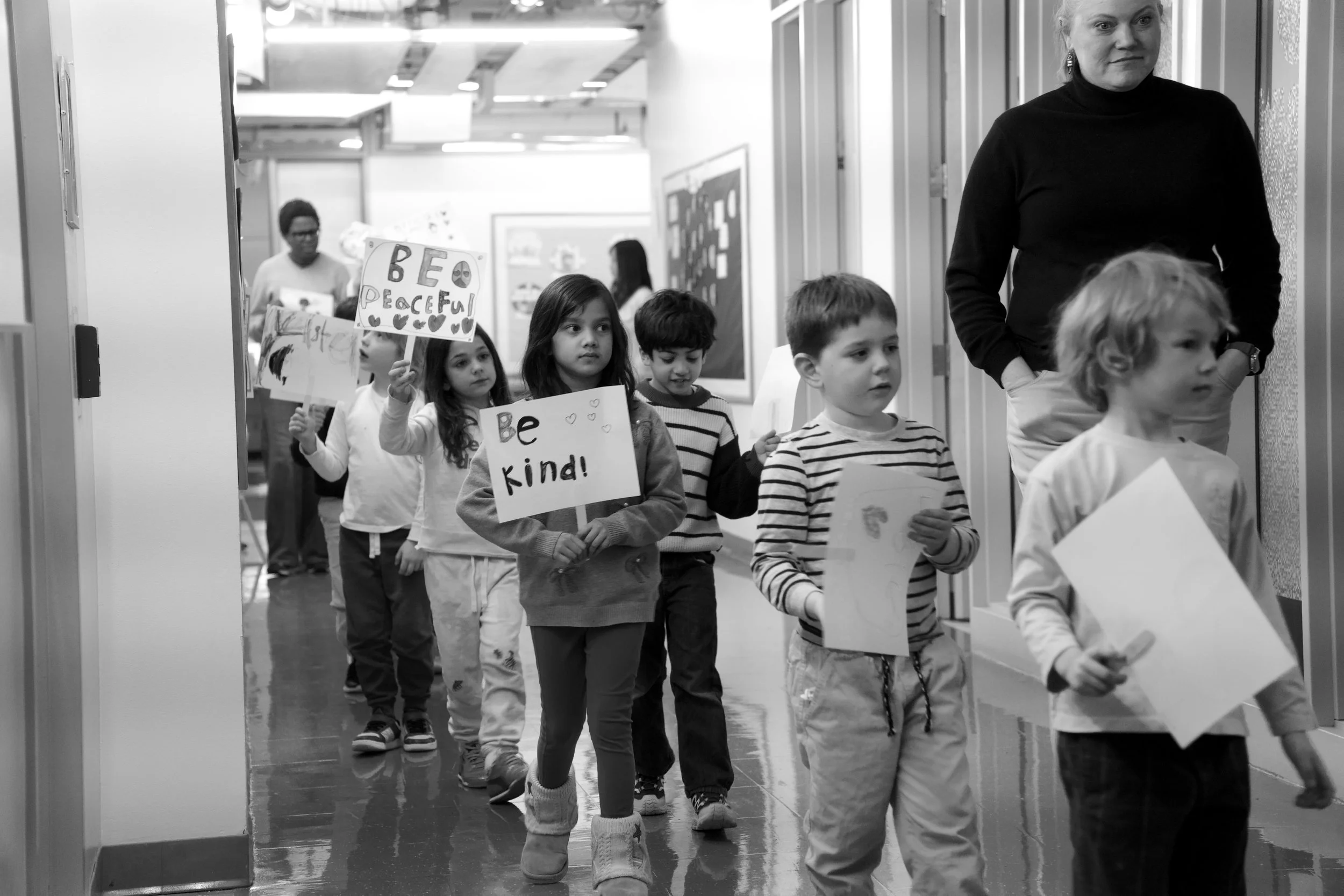
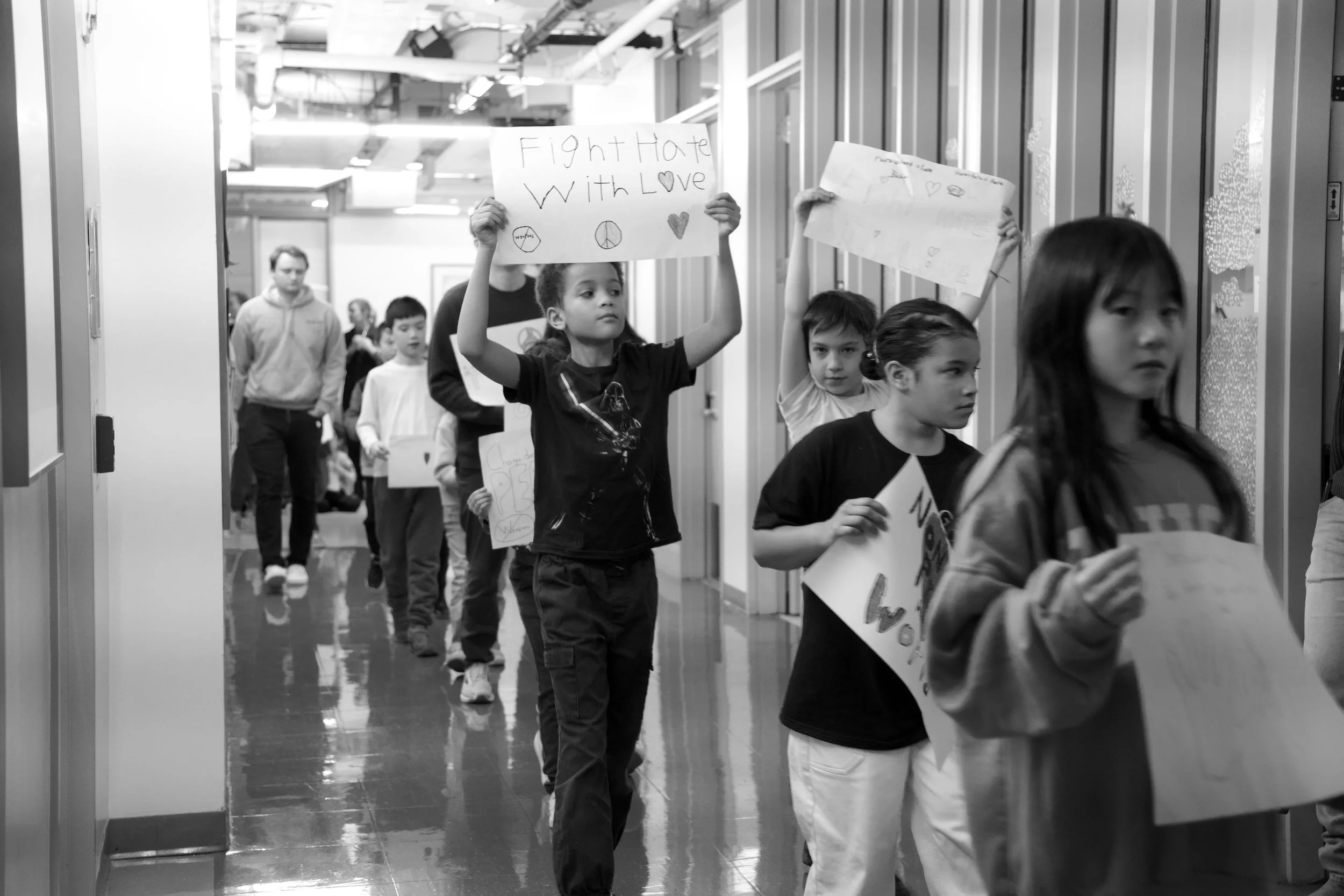
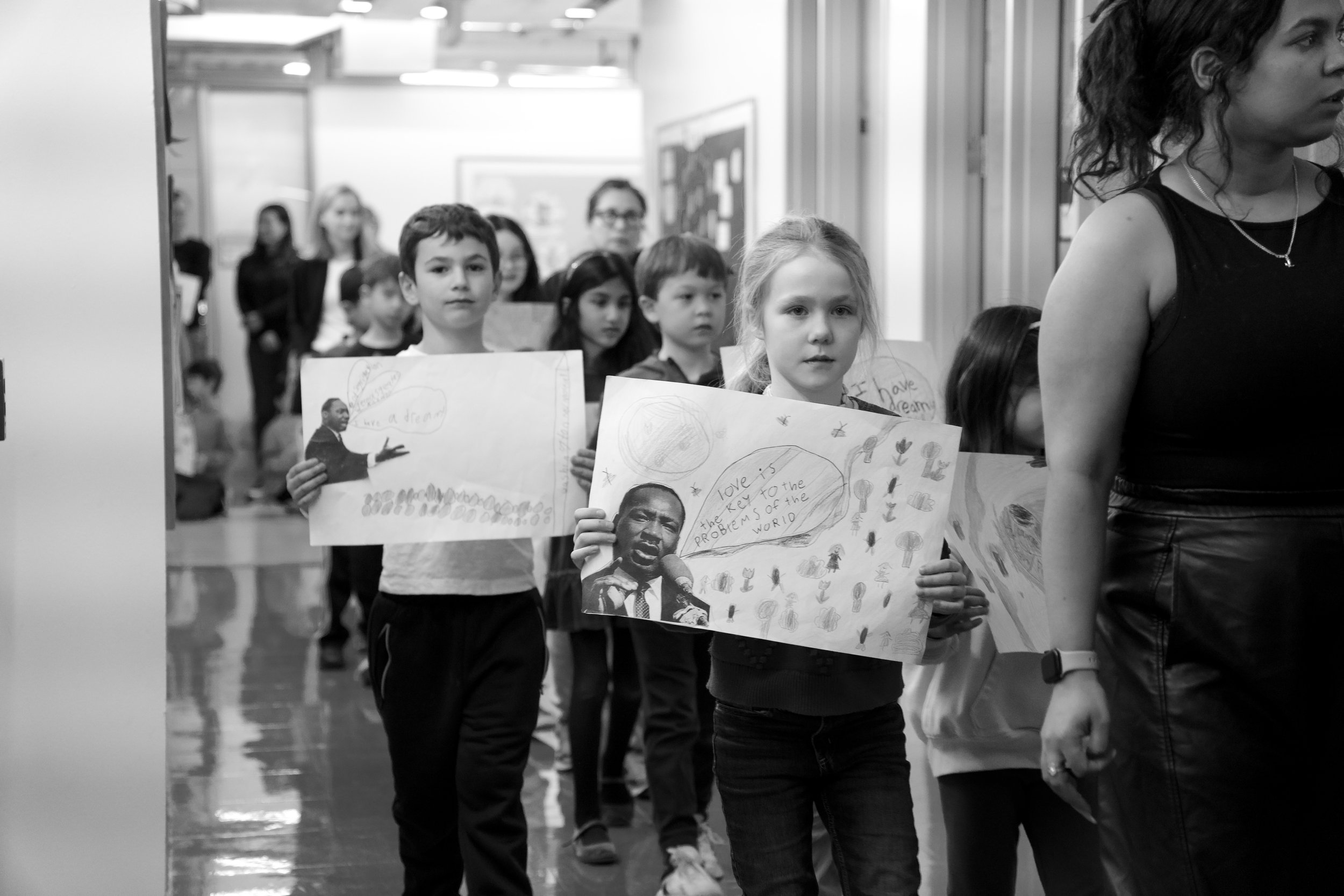
In January, the entire Speyer community gathered for our fourth annual silent march and all-school assembly in honor of Dr. Martin Luther King, Jr. In the days leading up to the silent march, students and teachers reflected on his legacy and discussed causes that are important to them. They also engaged in age-appropriate discussions and lessons about different aspects and inspirations from the course of his life and then created posters to reflect what they had learned.
During the assembly, Speyer’s Director of Equity and Inclusion Mr. Greenhouse explained to our gathered community the questions each grade tackled, what they learned, and how their posters reflected that:
Our Kindergarten students began this journey by asking a foundational question "Who was Martin Luther King, Jr.?" and explored what tools he used to become an agent of change. They learned that Dr. King used tools like words, love, courage, and peaceful action. Their posters remind us that change does not always start with something big — it often begins with kindness, honesty, and care for others.
First grade students explored the question: "Why did Dr. King dream?" They learned that Dr. King dreamed because the world as it was did not yet reflect the world as it could be. Their posters remind us that dreaming is an act of hope — and that hope is where change begins.
Second Grade students studied Dr. King’s speeches and asked "What were Dr. King’s 'Big Words'" and "How did those words change the world?" They identified words like justice, freedom, peace, equality, and love. Their posters show us that words matter — and that choosing them carefully can inspire people to act.
Our Third Grade asked "What did Dr. King stand for?" and "Why did he write his speeches?" They learned that Dr. King wrote to persuade, to inspire, and to challenge people to live up to their values. Their posters remind us that speaking and writing with purpose can shape history.
Fourth Grade students explored the shared ideas of Dr. King and Mahatma Gandhi by asking "What ideas did they promote that led to worldwide change?" They studied nonviolence, moral courage, and collective responsibility. Their posters help us understand that Dr. King’s work was part of a global movement for justice.
Fifth Grade students researched Dr. King’s legacy of nonviolent resistance, asking "Why was nonviolent resistance necessary?" and "What challenges did it bring?" They learned that nonviolence was not passive or easy — it required discipline, bravery, and deep moral commitment. Their posters remind us that choosing peace in the face of injustice takes strength.
Sixth Grade students examined Dr. King’s advocacy for human rights and economic justice, asking "What did Dr. King mean when he said, 'Poverty is violence'?" They also explored how he risked his popularity to speak out about economic inequality. Their posters challenge us to think about fairness, responsibility, and who is protected in our society.
Seventh Grade explored the role of music during the Civil Rights Movement, asking "How does music act as a unifying force? " and "What songs and lyrics inspired bravery and encouraged nonviolence?" They learned that music helped people face fear together. Their posters remind us that art and culture can sustain movements.
And finally, our Eighth Grade students approached Dr. King not only as a civil rights leader, but as a moral philosopher. They examined tensions such as justice versus comfort, democracy versus power, and memory versus truth. Through careful reflection, their posters invite us not just to admire Dr. King, but to wrestle honestly with the moral questions he raised.
Also during the assembly, our community was reminded how it is important to honor the many civil rights heroes whose names are not always as well known, but whose courage helped make the movement possible. Mr. Greenhouse illuminated how that movements are built not by one leader alone, but by many people — some famous, many not. He highlighted the importance of the actions and legacies of activists such as Claudette Colvin, Ella Baker, Bayard Rustin, Septima Clark, and Fannie Lou Hamer.
Before everyone departed the assembly, Mr. Greenhouse underscored how Dr. King’s legacy does not live only in history books or famous speeches. It lives in classrooms where students ask hard questions, knowing that understanding history means looking beyond a single story and recognizing the many people and ideas that shaped change. He urged our Dragons: "As you look back on your poster, I invite you to hold onto one idea or one question that stood out to you today. Think about how that idea might guide the way you treat others, the choices you make, or the courage you show when something feels unfair."
A huge thank you to Mr. Greenhouse for organizing and planning this important assembly and to all of our community for taking part in this meaningful Speyer tradition!