
Speyer was founded on a central principle: gifted learners are happier and achieve more of their potential when offered a curriculum tailored to their specific abilities and when surrounded by other students with high potential.
Speyer’s research-based pedagogy relies also in part on the ideas of Lev Vygotsky, who stressed the importance of social interactions and a supportive community in a student’s learning process. His theory focuses on the difference between what a learner can do on their own and what they can achieve with help from a “More Knowledgeable Other.” Often called Sociocultural Theory, it suggests that learning is, at its core, a social process. Students build higher-level thinking skills by interacting with “more knowledgeable” teachers, peers, and parents within their cultural environment.
Speyer’s pedagogical thesis is this: when you surround high-potential students with other high-potential students and give them a curriculum that pushes them and teachers that support them both academically and emotionally, they reach further heights than ever thought possible.
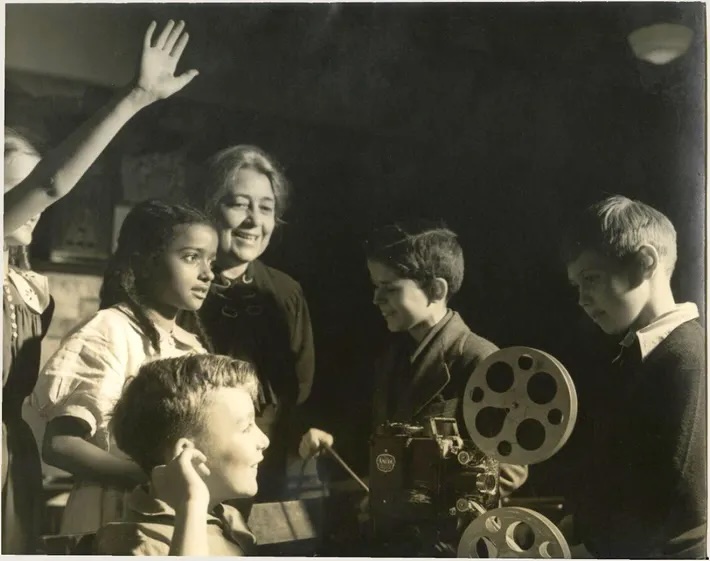
During the 1930s, public schools in New York City experienced an unprecedented level of growth. As a result, teachers became extremely regimented in their instruction style to manage their large classrooms and students were grouped regardless of their abilities or learning styles. This learning environment was particularly problematic for students who were not average learners.
In 1934, New York City public schools, in conjunction with the Teachers College at Columbia University, approved a five-year experimental program around the creation of a special school to educate those identified as “rapid learners.” Dr. Leta S. Hollingworth, considered by many to be the Grandmother of Gifted Education, was invited to serve as head of the “Terman Classes,” classes composed of students with IQ scores above 130.
The design of the program was not just focused on intellectual stimulation but also social-emotional learning and was carefully crafted to encourage the students’ present and future needs as world citizens. Dr. Hollingworth’s interdisciplinary Social Studies curriculum was the first of its kind to be developed for gifted children in the country. When Dr. Hollingworth died on November 27, 1939, her work at Speyer School was incomplete.
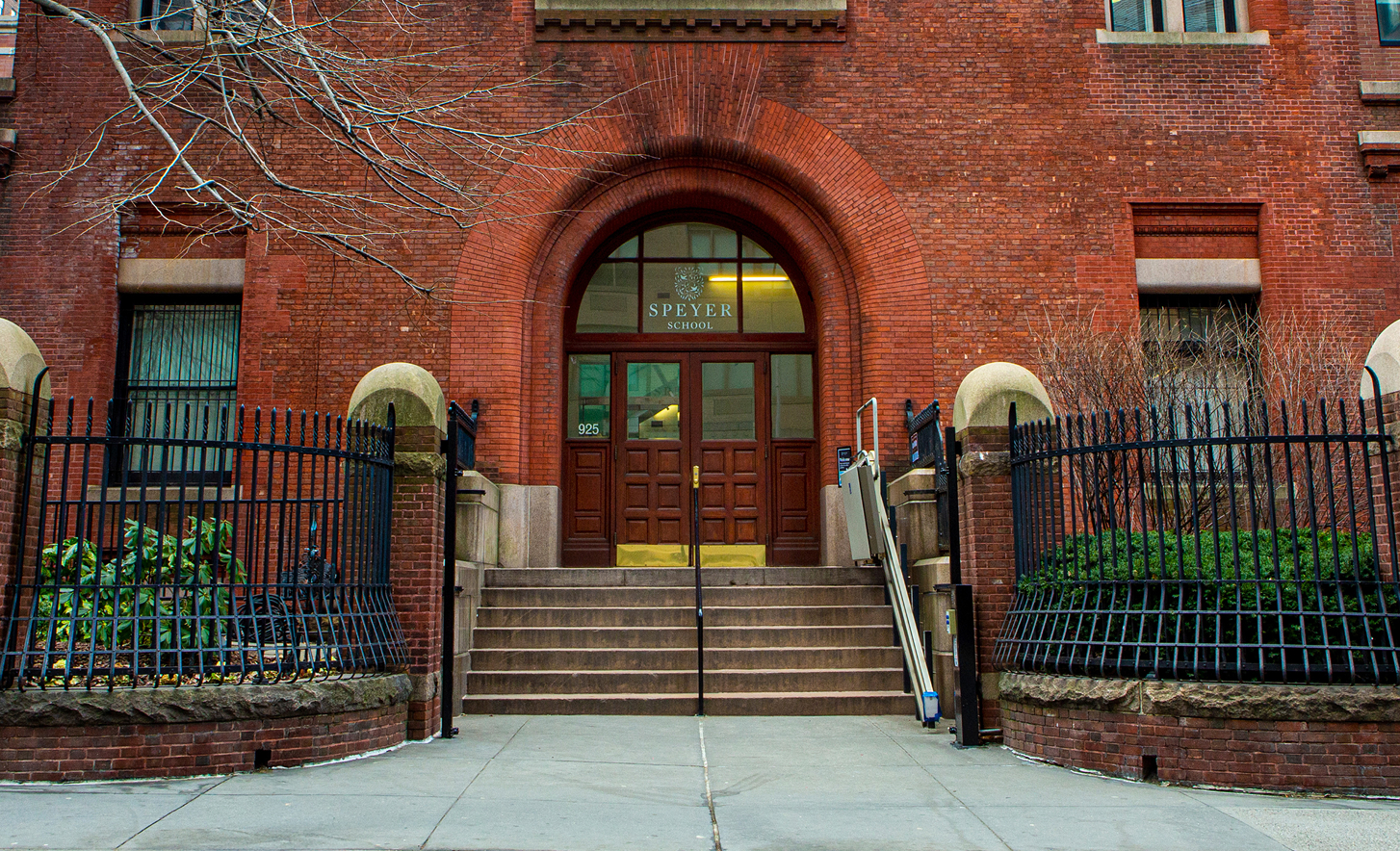
Today, at Speyer Legacy School, we proudly carry her work forward. Founded in 2009 by a group of visionary women, Speyer began with 26 students in a two-classroom space on West 61st street and has grown to more than 340 students in our modern, 85,000-square-foot campus on West 59th Street in Midtown Manhattan.
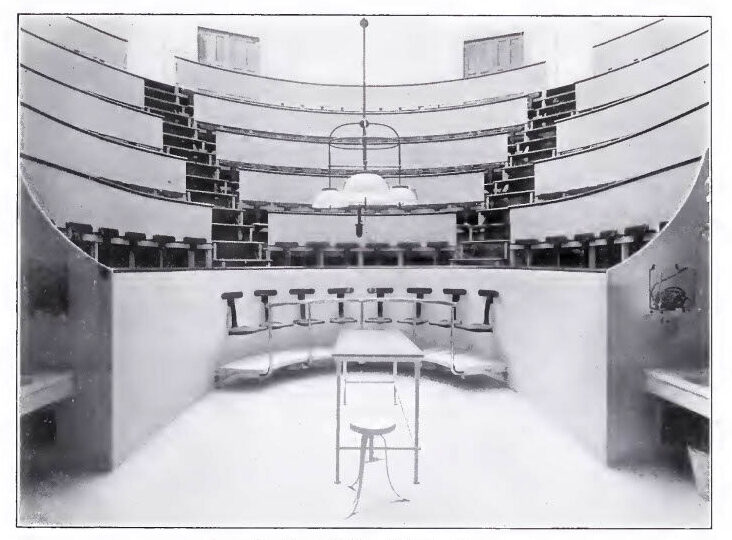
Speyer comprises two buildings: a historical building and a modern tower. In the late 1890s, the historic building belonged to Roosevelt Hospital and housed The Syms Operating Theater, dubbed “the most advanced operating theater in the world” at the time. It was a teaching operating theater with auditorium seating for 180 observers, where medical students would come in to watch live operations.
At the top of the main staircase that we affectionately call Mount Speyer, we encourage all visitors to look up. Embedded within Speyer’s architecture from that historic operating theater is a representation of a Speyer education: an amazing skylight. Learning at Speyer is determined by ability — with no preconceived ideas about capabilities. As the skylight illustrates, the learning potential for each student is limitless here and Speyer students are encouraged to “fly high.”
As you move from the historical building to our modern tower, the old and new buildings connect. There are unfinished walls and the original doorways into the old operating theater are still visible. These aspects were deliberately left this way. When a Speyer student is in First Grade, they will learn about the emergence of New York City and being able to see some architecture in their school that dates back to those days is pretty amazing. Our building shows the progress of the city and its ever-changing landscape.
Speyer is a horizontal space rather than vertical, which is very unusual in New York City. There are research studies that show that physical space promotes mental space. It’s one of our goals at Speyer to give our students the best possible atmosphere, to absorb and learn to the best of their ability.
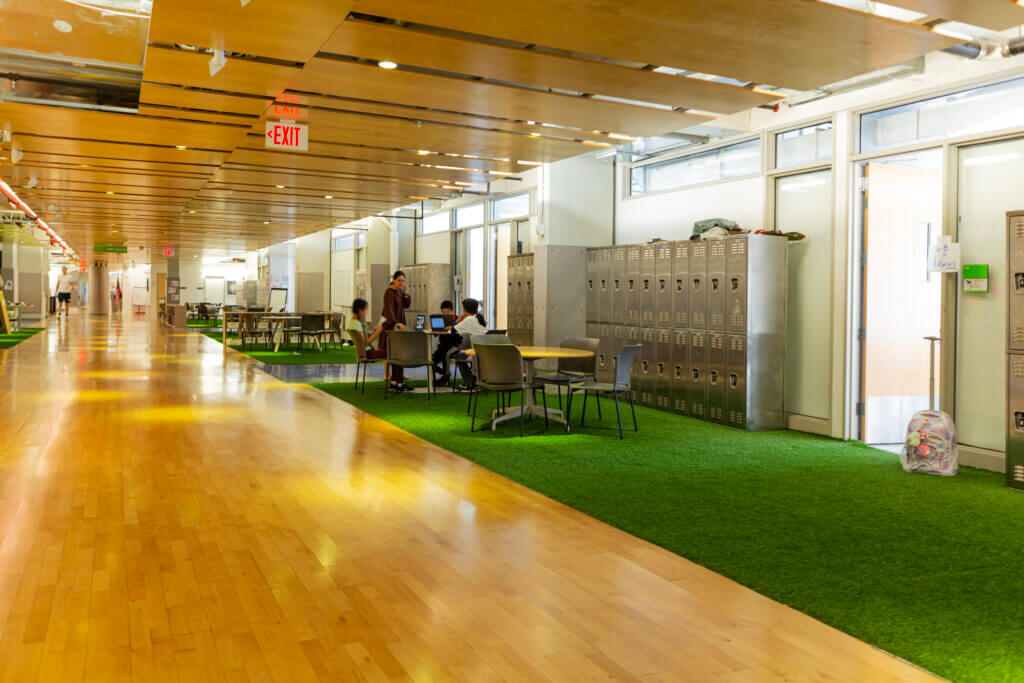
Our modern tower, where almost all of our classrooms are housed, was designed with intentionality to support a growth mindset approach for our gifted learners. The main focal point is what we refer to as “The Boulevard” — where all of our students traverse each day as part of our community. Outside of each classroom, there is its own “grass lawn”. These areas are an extension of the classroom and are multi-purpose and flexible spaces designed to support student needs. They are used for break-out reading groups or math groups to support differentiation, when classes are working collaboratively in small groups, for independent study, or for simply socializing during free time.
Pedagogy at Speyer, as developed and based on the history and research outlined above, is designed to meet the needs of gifted learners through an enriched curriculum that addresses the mind, body, and heart of each child. Speyer students are members of a school community that nurtures scholarship, integrity, and social and emotional development.
Central to Speyer’s mission is the appreciation for innovation, differentiation, and the unknown. It is our goal that students will leave Speyer confident in their individuality as they tackle complex and nuanced challenges in an increasingly diverse and inclusive world.
In short, our mission is the guiding north star of our school.
At The Speyer Legacy School, students are inspired to be intellectually curious and passionate. They realize their full potential as accelerated learners in a collaborative community that is committed to ethical values and action. Speyer students learn with like-minded classmates and are guided by academically fearless teachers who share and nourish their enthusiasm for knowledge and inquiry.
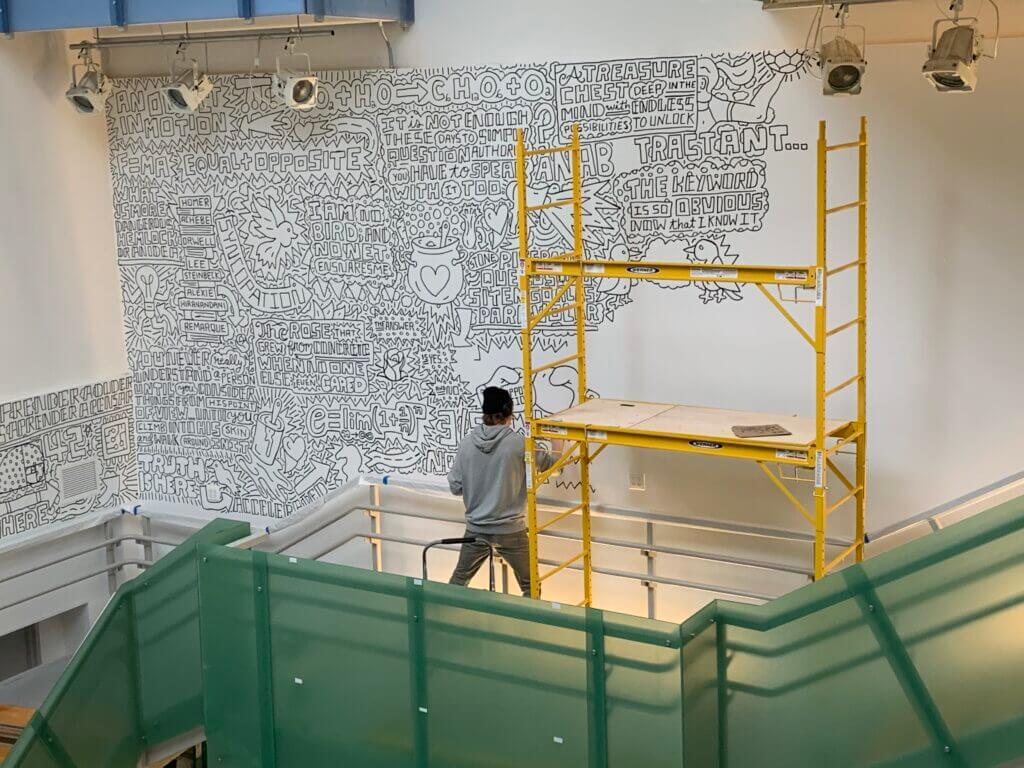
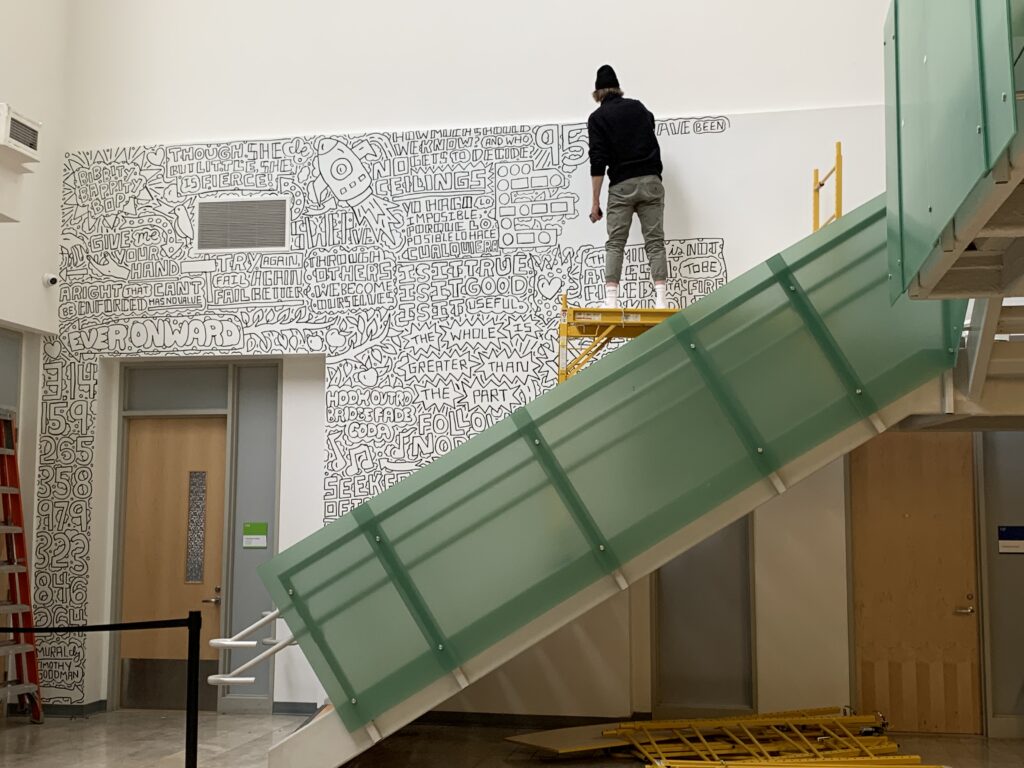
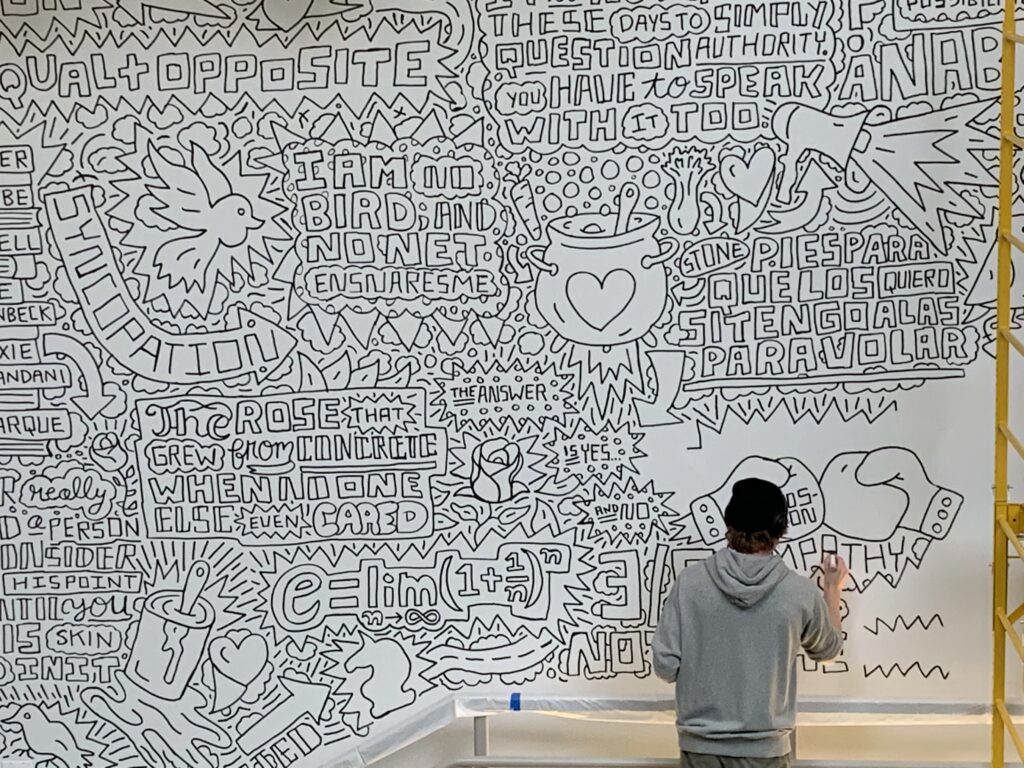
As you walk up the main staircase (yes, we have quite a few), you will be accompanied by a one-of-a-kind custom mural on the wall. It’s a wall full of hidden treasures to catch the interest of those new and old to our school. It’s a scrapbook of wonder. It’s a visual representation of a Speyer education.
The inspiration for the mural is to ask yourself, “What would you find in the brain of a Speyer graduate?” Sketches, quotes, formulas, and ideas collected throughout a Speyer student’s journey from Kindergarten through Eighth Grade were gathered from faculty, students, and other members of our community. A favorite passage from To Kill A Mockingbird, Socrates’ Test of Three, the digits of Pi, a character from The Odyssey, a poem by E.E. Cummings, a quote from Frida Kahlo in Spanish, chess pieces, the Golden Ratio, a gavel, the parts of a song form…and more! Yes, every student will have come across these intellectual touchstones found in the mural during their time here.
It reflects the richness, depth, and scope of our gifted curriculum and communicates our commitment to the social and emotional growth of our students and our diverse community in terms of gender, ethnicity, and interests.
Renowned artist Timothy Goodman was commissioned to bring it to life in November 2019. Some of Goodman’s clients include Google, Samsung, Uniqlo, Apple, Tiffany &Co., the NBA, Starbucks, Target, MoMA, Netflix, The New Yorker, and The New York Times…and now Speyer. We chose Timothy because his style is an excellent fit for the concept and because of his enthusiasm for the project and our school when we told him about it.
We gave Timothy our list and also some license to interpret this in his own style and voice because it would elevate the whole idea that much further, and we documented Timothy at work during the installation of the mural. He also came to speak to Speyer’s students about his work and how he created our mural, encouraging all of us to follow our passion.