
In Speyer’s Science classes, students become very comfortable with asking the how and why questions (as opposed to just the whos, whats, and whens) and recognize that some questions may not concrete have answers.
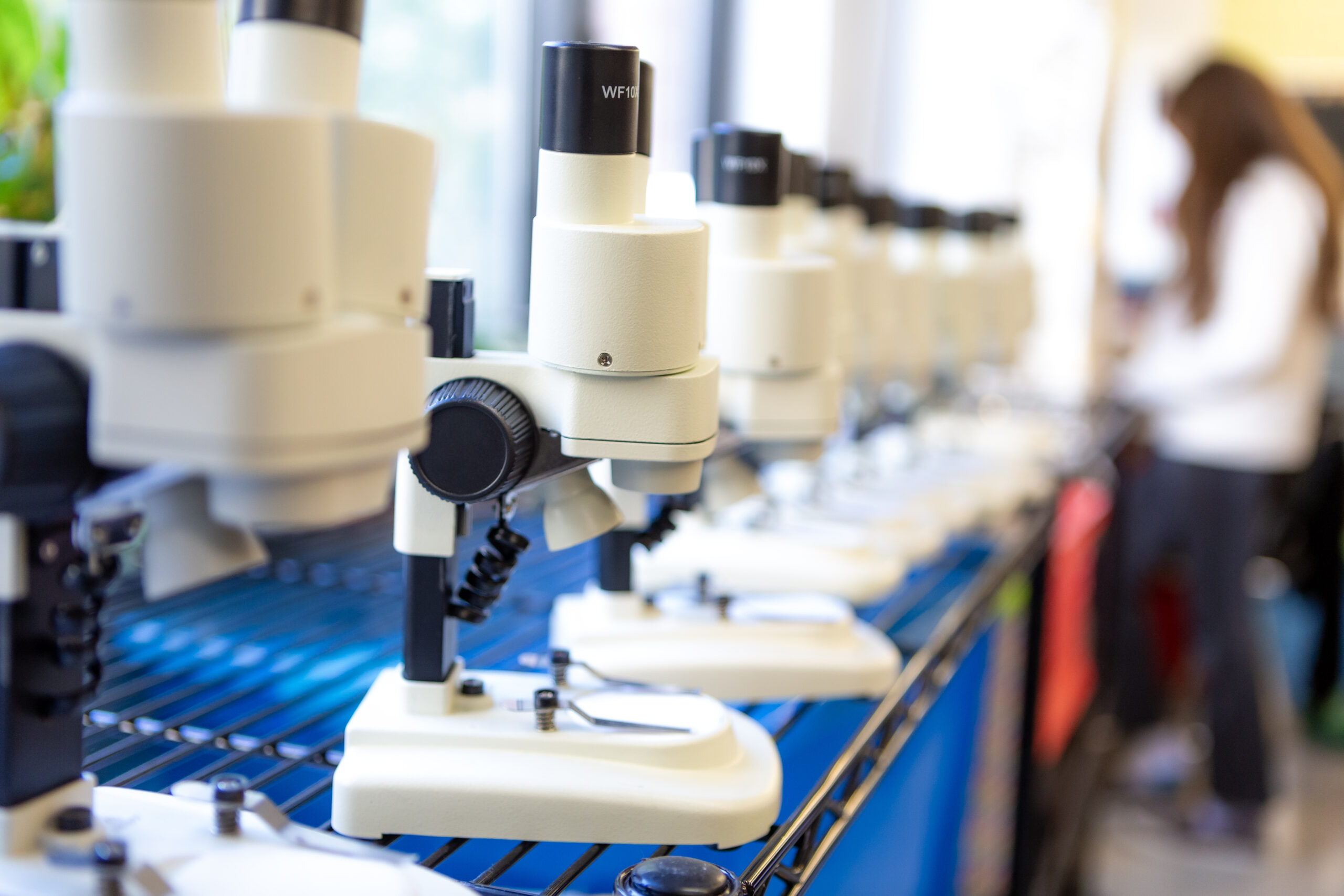
In addition, we have crafted our Science curriculum to support the exploration of specific phenomena through a hands-on, project-based lens that includes lab-based experimentation.
On the journey toward innovation, we celebrate the many ways of thinking, including ways of thought that challenge our norms and re-enforce the concept that we learn by doing and celebrate mistakes and failures alongside successes.
Differentiation guides our scientific inquiries as we recognize students’ varying learning styles, areas of interest, pacing, content-knowledge, methods of recording data, and approaches to presenting one’s ideas, understandings, and questions. We nurture inquisitive and critical students who look at all aspects of a scientific problem and challenge them to work together as a team to create solutions.
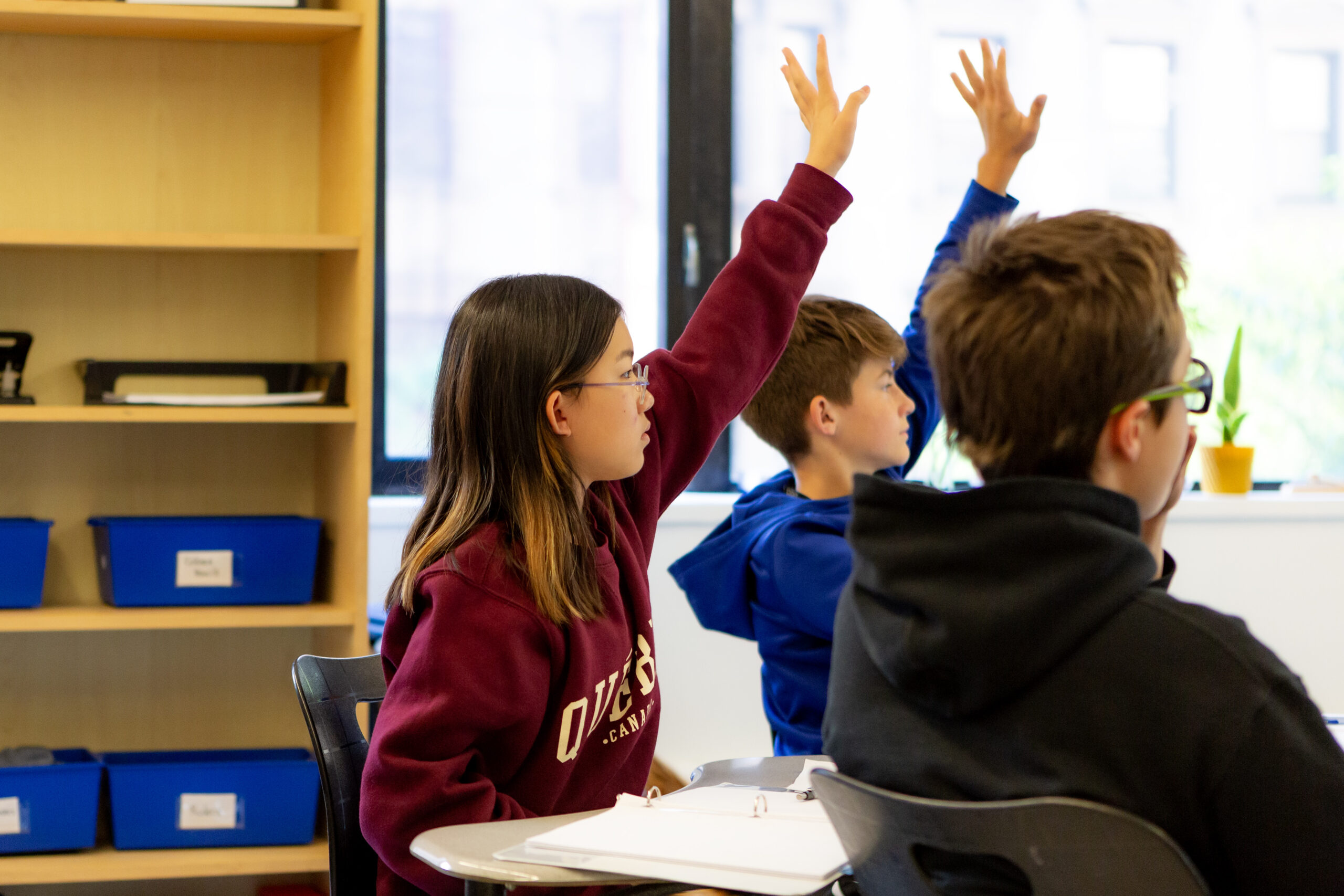
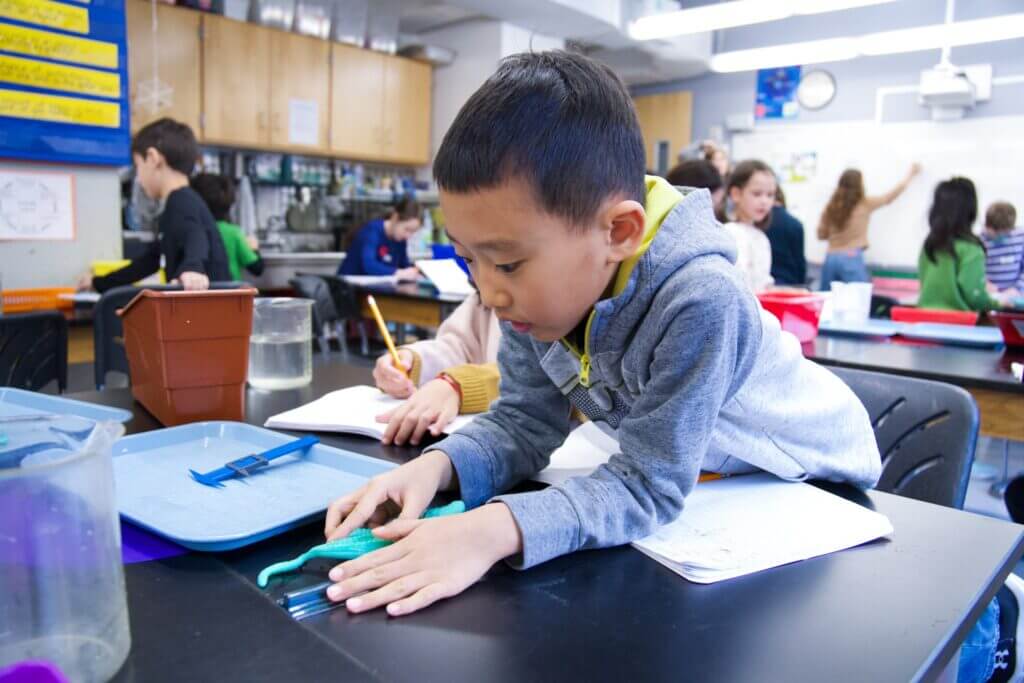
At Speyer, we believe learning happens best by doing and space is made for mistakes and failures right alongside successes. Both our Lower and Middle School Science curriculum is very hands-on, lab-based, and well-rounded. Whenever possible and where applicable, interdisciplinary connections are made between the units of study in Science and what students are exploring in their other subjects including Humanities, Math, Makers Lab, and Art. Classes often rely on collaboration and teamwork, honing those vital skills that will be necessary throughout higher grades and beyond.
At the end of their Science journey from Kindergarten through Eighth Grade, Speyer students will have access and familiarity with a wide variety of concepts and skills that will benefit them for years to come. Our true hope is that our students will continue to understand the value of scientific thinking and make evidence and data informed decisions in their higher education.
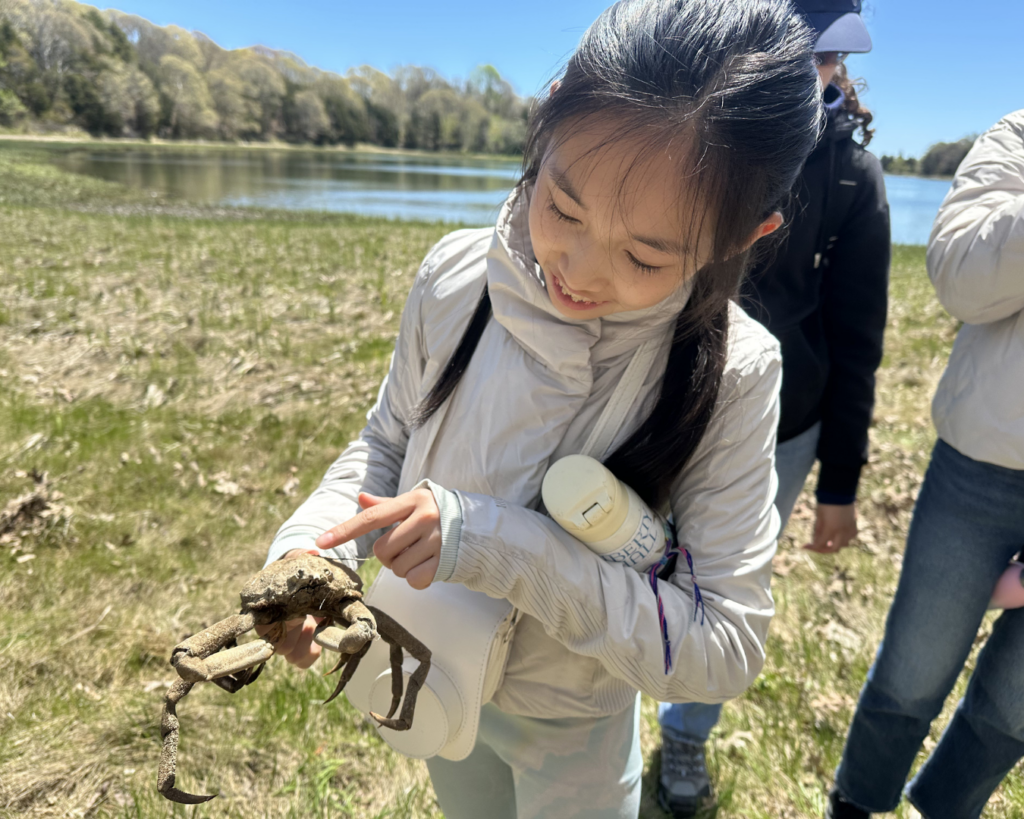
Science at Speyer uses the world outside of Speyer as a source of inquiry. Students use all that New York City has to offer — field trips to various parks, museums, and other cultural institutions in the area provide numerous opportunities for our Speyer scientists.
In Lower School, Science is held two times per six-day cycle in Kindergarten through Second Grade and three times per cycle in Third and Fourth Grade. In Middle School, students have Science four per six-day cycle with three regular 45-minute periods and one 90-minute lab period.
Kindergarten students begin the science curriculum by exploring the question “What is a scientist?” as they learn the names of science tools and practice sorting and classifying. Their science learning connects closely to Humanities, including a study of “me” through the human body and life cycles, as well as a unit on the water cycle linked to their exploration of life around the world and global agents of change, with an emphasis on caring for our water. Students investigate the structure and function of the skeletal, muscular, digestive, respiratory, circulatory, and nervous systems, explore the stages of the water cycle — evaporation, condensation, precipitation, runoff, and groundwater — and conclude the year with a study of life cycles such as insect metamorphosis and the life cycles of plants, frogs, butterflies, and chicks.
First Grade students study plants with a focus on plants native to New York, connecting this work to their Humanities study of the history of Manhattan. They explore the structure and function of roots, stems, leaves, flowers, fruit, and seeds, and investigate how light and sound travel, including concepts such as refraction, reflection, absorption, and the properties of transparent, translucent, and opaque materials, tying this learning to life in New York City. Students also study patterns of the sun, moon, and Earth, later connecting this learning to how the Lenape measured time using a lunar calendar. The year concludes with hands-on experiments exploring water filters, how they work, and how these observations connect to naturally occurring water filtration systems.
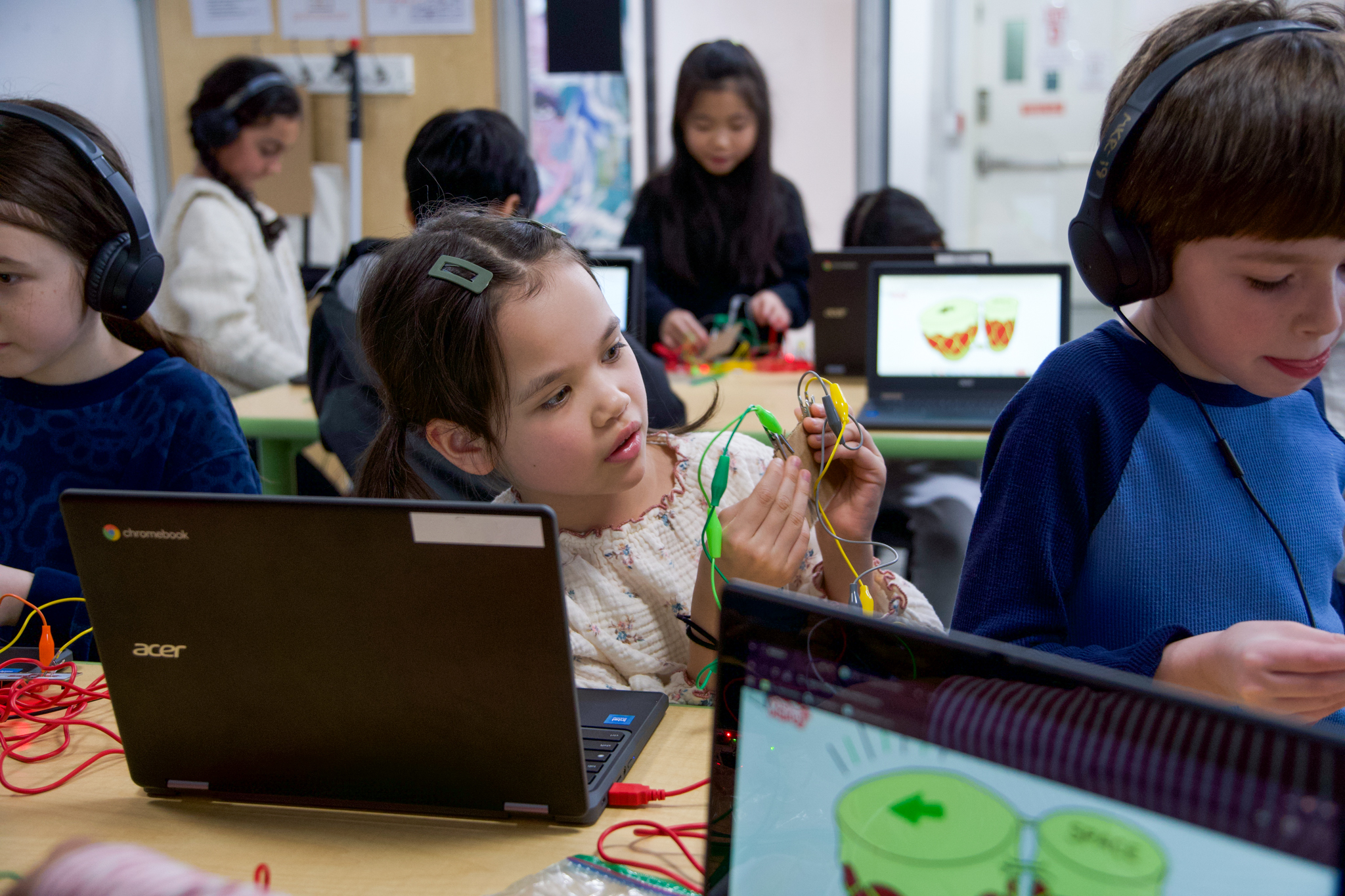
Second Grade students begin the Science curriculum by learning about the Scientific Method, studying its steps and vocabulary and putting it into practice using tools like microscopes. This work connects to the role of an archaeologist and ties into their Humanities study of ancient civilizations. Students also explore circuits through hands-on projects, starting with simple closed circuits using batteries and lightbulbs and advancing to more complex designs that include multiple bulbs in series and parallel, switches, motors, and other components. Engineering concepts are introduced through a unit on bridges and simple machines, focusing on different types of bridges, the engineering design process, and theories about how the pyramids were built. In addition, students study biomes and food chains, beginning with a hands-on owl pellet dissection to learn about nocturnal animals and how energy moves through ecosystems.
Third Grade students begin the year studying biomes of the world and North America, connecting this work to their Humanities study of United States history through topics such as weather patterns, adaptations, native and invasive species, and biodiversity. They develop strong measurement skills by learning metric units and tools used to measure length, mass, volume, and temperature, and apply these skills during hands-on investigations. They explore the concept of food chains and food webs through the lens of owl pellets (dissecting the pellets, identifying the bones, and constructing a possible food chain for the owl pellet given). Engineering concepts are introduced through units on simple machines and bridges, where students investigate the relationship between work, mass, and distance by building and experimenting with ramps, levers, screws, wheels and axles, wedges, and pulleys, connecting this work to city expansion and westward expansion.
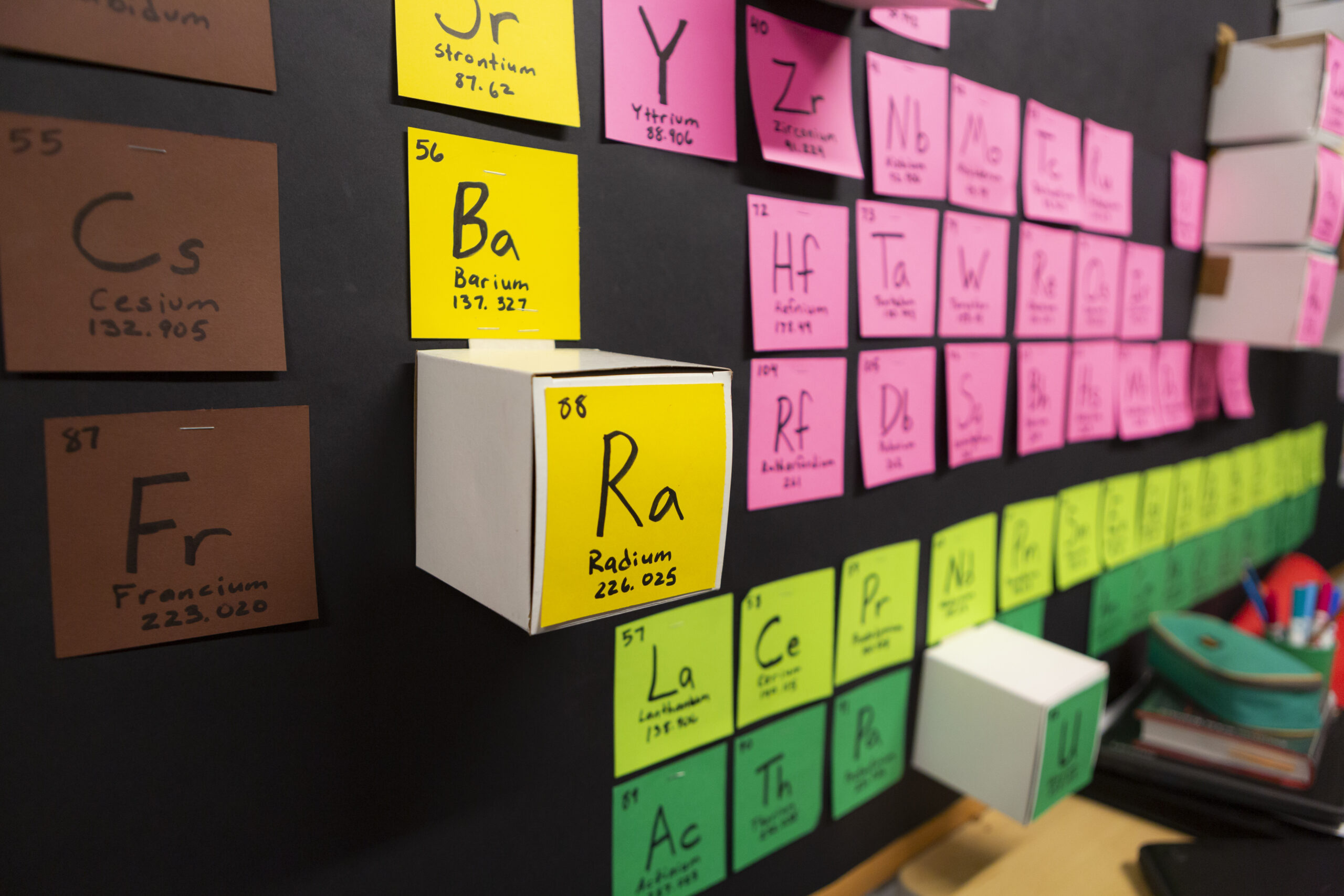
Fourth Grade students build on prior science learning as they prepare for the transition to Middle School Science, beginning with an exploration of powers of 10 and relative size, from the very small to the very large. The periodic table of elements is examined as an introduction to basic chemistry concepts, including atomic structure (protons and electrons), simple chemical reactions, and how to represent those reactions on paper. Students also complete an in-depth unit on the solar system and space, conducting independent research on a space topic of their choosing as part of an interdisciplinary project tied to their Space Race study in Humanities.
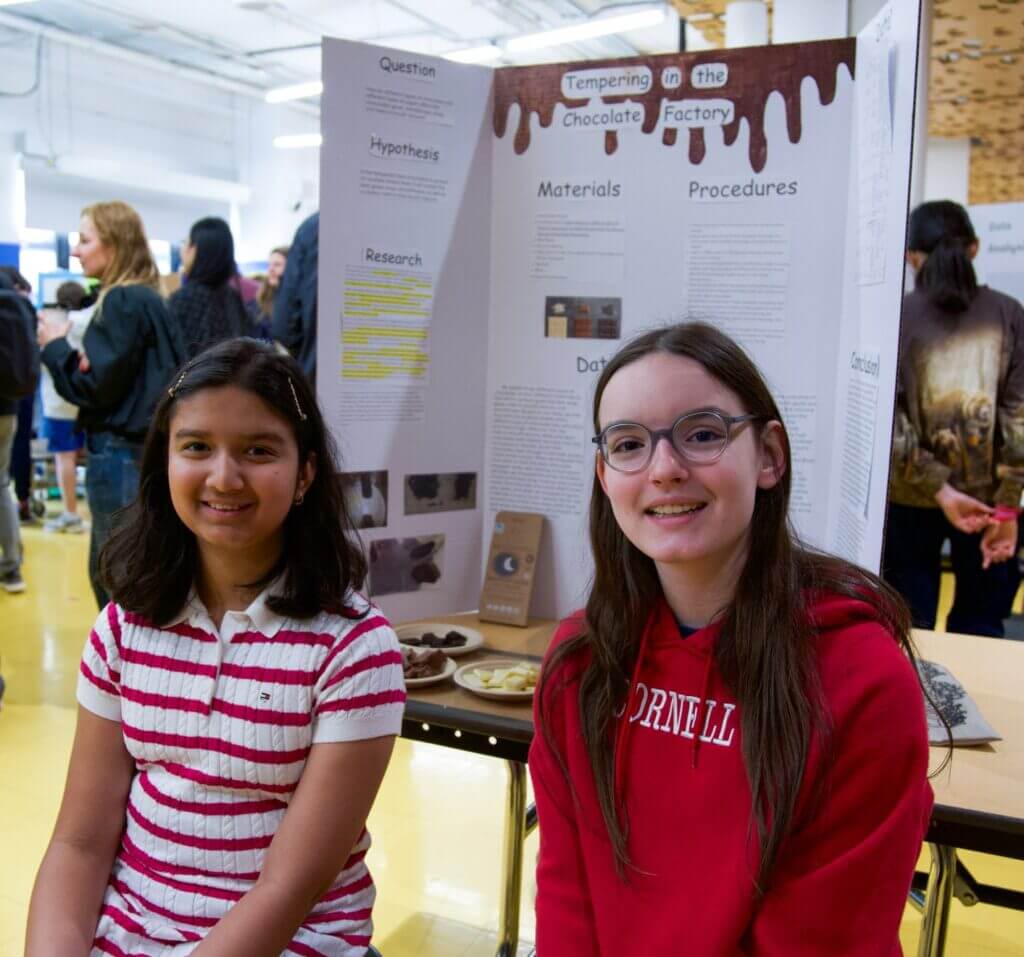
In Fifth Grade, students explore Earth Science by investigating how energy from the sun and Earth’s core drives the systems of our planet. Through the study of weather, geology, light and sound waves, thermal energy, natural disasters, and Earth’s interconnected systems, students develop scientific literacy through hands-on experimentation, field studies, and inquiry-based learning. Students use observation, measurement, modeling, and data analysis to conduct experiments, draw conclusions, and communicate their findings, culminating in an independent research project presented at their Spring Science Fair. Field studies in Central Park provide meaningful, real-world connections to concepts explored in the classroom.
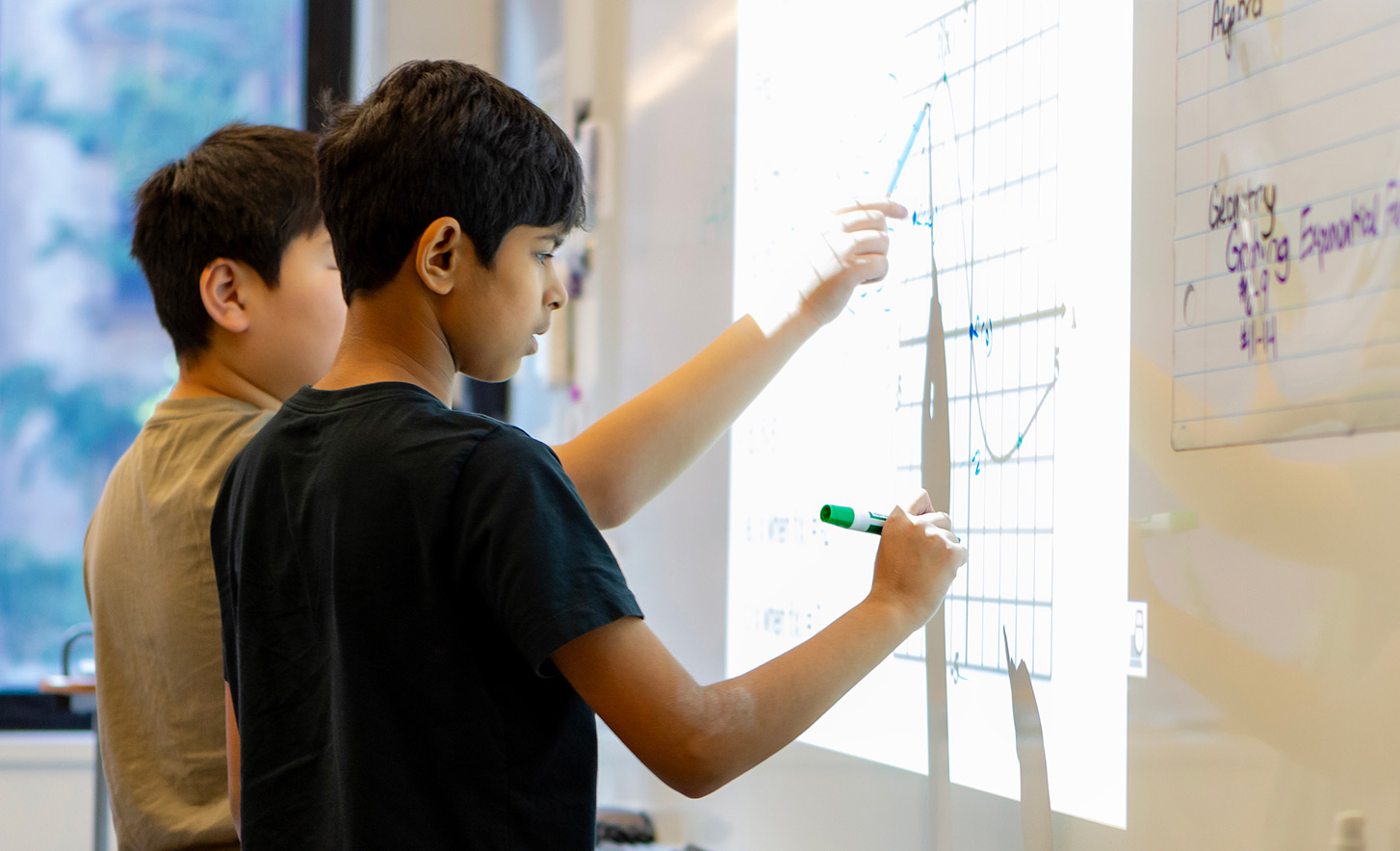
Sixth Grade students explore the concept of perspective and the connection between physical and chemical properties of matter. Throughout their Chemistry unit, students are challenged through a series of molecular, atomic, and subatomic approaches and begin to view the world around them in a new exciting way. Students learn about vectors, model drawings to describe the invisible forces acting on objects, and key concepts such as force, mass, weight, velocity, acceleration, gravity, work, and equilibrium. Students then zoom out from their microanalysis of matter and study Astronomy in a multifaceted manner through a space colonization project in which they design all aspects of a colony on an exoplanet. Students further develop their understanding of Newtonian mechanics and explore how mathematical equations describe relationships among foundational concepts in physics. Throughout the year, they engage in hands-on experiments and problem-solving activities, culminating in a STEM fair project that showcases their understanding and creativity.
In Seventh Grade, students work on the Hudson Data Jam, a competition that challenges students to creatively tell Science stories of the Hudson River watershed. This extensive research unit uses all of the foundational skills they have cultivated in previous grades and rests on fieldwork and data literacy work. In addition, the Seventh Grade Science curriculum delves deeper into Chemistry and Physics, exploring concepts such as the atomic composition of simple molecules and extended structures, matter and its interactions, and force and its interactions. Students also examine the historical development of scientific thought, including the mathematical foundations of the European scientific revolution, the contributions of Indian mathematicians who developed our numeral system, and the work of Muslim astronomers, Copernicus, and Galileo to understand how advances in observation and theory challenged earlier models of the universe and helped establish the foundations of classical physics through Newton. Students connect these historical foundations to modern physics through hands-on investigations, designing and testing marble runs and egg drop vehicle design to investigate gravity, potential and kinetic energy, velocity, acceleration, centripetal force, and G-force, and then communicate their findings through formal lab reports.
The Eighth Grade Science curriculum explores the fundamentals of Biology including taxonomy, evolution, and genetics, with a specific focus on understanding nature and understanding ourselves. As the story of the revolution in Biology unfolds, students connect this Science to their studies in Humanities, learning how the ideas of Biology influenced the world in the prelude to the Civil War in the polygeny/monogeny debate that shaped Darwin’s “Origin of Species”. As they study the complexity of genetics, they learn how Mendelian genetics was simplified and distorted into eugenics in the United States and, in turn, Nazi Germany. They explore the life and work of Nicolai Vavilov, who created the world’s first international seed bank and exemplified Mendelian genetics and international science as a force for good in the midst of the darkness of WWII. Our Eighth Grade explores how scientific research works, beginning with arguments from Stuart Firestein’s books Ignorance and Failure. Students use themselves as a personal laboratory to explore body systems and how metabolism interplays with our cardiovascular system and digestive system, and study how thoughts and feelings affect the nervous system and how the nervous system affects our memory and emotions.