
In Speyer’s Humanities curriculum, we nurture our students to see the world through the lens of historical knowledge and interdisciplinary inquiry.
From Kindergarten through Eighth Grade, Humanities is the academic core of the curriculum. The themes explored in Humanities are woven through a variety of content areas, supporting our in-depth, cross-curricular approach to learning, enabling students to truly go in depth with their studies.
At each grade level, opportunities are embedded within the Humanities curriculum for students to think critically across disciplines, to express their individual and group creativity, and to make personal connections through their classroom experiences.
Speyer Humanities classes provide an essential space for students to contemplate multiple perspectives and evolve into observers who question the world around them and seek out alternate perspectives in an effort to be empathetic and compassionate learners.
The overarching theme throughout the year is the analysis of human interactions across various communities. Kindergarteners explore self, identity, and community, agents of change, and the stories humans tell. They begin this inquiry by sharing the origins of their names. This conversation becomes a jumping off point to a deeper discussion of internal and external elements of identity. Kindergarteners continue with an examination of families, local communities, and what makes a community happy, healthy, and safe. They then zoom out to learn about local and global agents of change. Students study different modalities of affecting social change and practice trying to solve problems that they notice in their own communities. We finish by exploring different types of stories, including Greek mythology and the Odyssey.
Students explore New York City now and New York City long ago and how the city has evolved and changed over time due to population needs/wants. Using the theme of progress, change, and human migration, students explore the idea of what makes a city a city and compare our five boroughs to other U.S. cities, as well as engage in a global comparison. In addition, they look to the past of the Lenape people and learn about how life was 500 years ago and then focus on the Harlem Renaissance. First graders dive into the ideas of problems and solutions about city living both in the past and today. How do New Yorkers make a life for themselves with the resources they have available? We also examine the notion that for centuries, people kept coming to New York City. What makes OUR city so special, unique, and desirable is a question we continuously come back to and analyze. A leading goal for Speyer’s First Grade humanities curriculum is for students to hone their analytical thinking and problem-solving skills as well as to begin to develop more sophisticated observation skills. Through the lens of New York City, students evaluate how environments change and how the changes impact citizens, exploring how the past influences their present environments and population.
Students study various aspects of Ancient Civilizations, including their traditions, structures, language, and geography. They analyze the design and the structures that were developed, which enabled successful and enduring civilizations and study the differing belief systems and their impact on those ancient societies (and today) within various cultural, social, and political practices. In addition, Speyer second graders explore the development of sophisticated math, writing, and astronomical systems that helped track time and capture important and accurate moments in history and study how the art and culture of these ancient civilizations have endured through to today. The civilizations and cultures explored have included the Aztec Empire, the Mali Empire, Chinese Dynasties, the Mayan Civilization, Ancient Egypt, and the Arctic Peoples.
In Third Grade, students learn United States history, with a focus on the necessity and vitality of citizenship and civic duty within a democracy. Students explore topics within American History (such as the American Revolution, industrialization, Westward Expansion, the Gold Rush, and the suffragette movement). They tackle the why and how individuals challenged the status quo of government and societal structures in the past, student especially with an analytical eye to the existence of order and chaos within society, Third Grade students learn how to independently use their skills to recognize and apply trends of the past to anticipate future events (socially, economically, and politically).
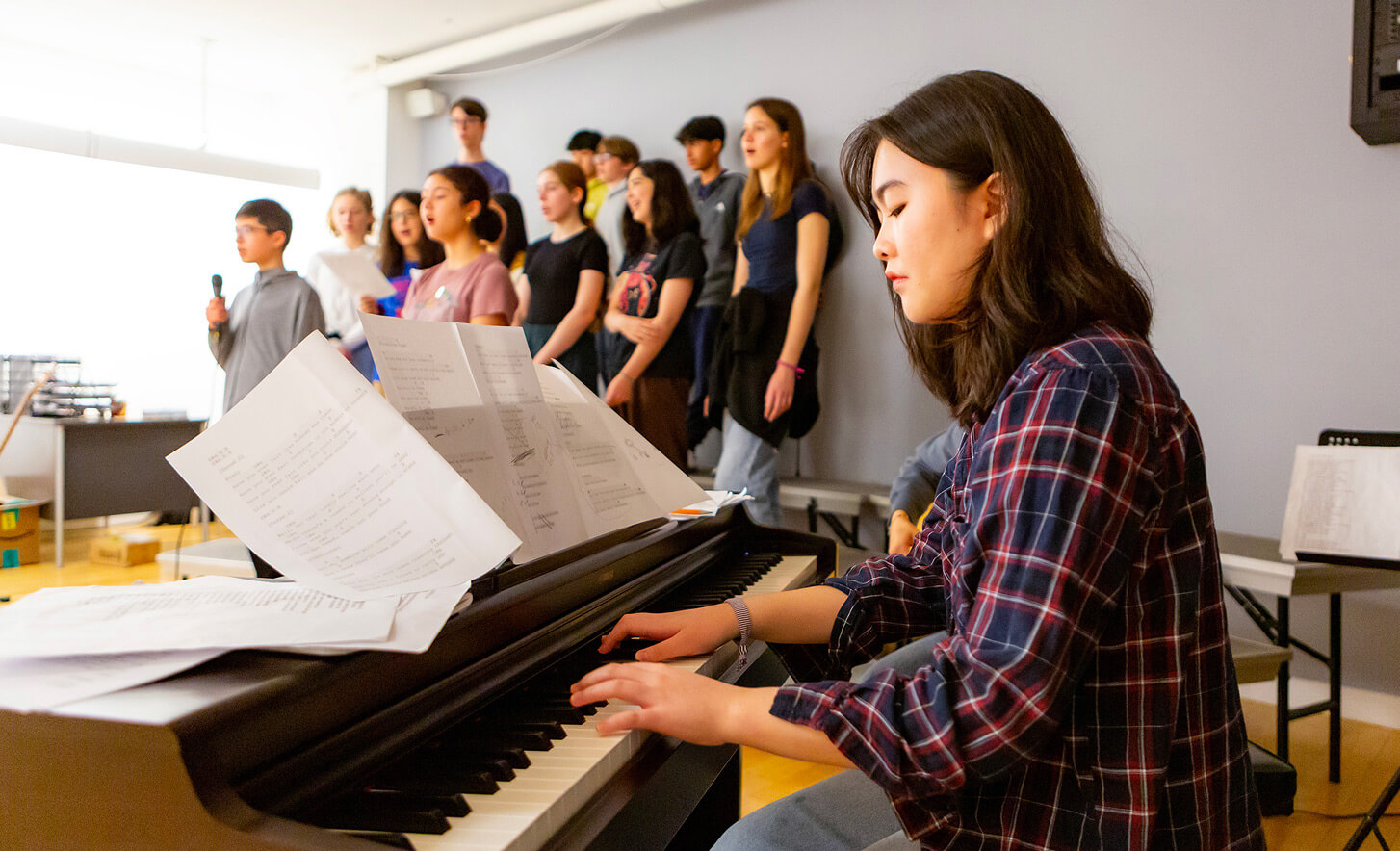
The focus on Fourth Grade Humanities is on globalization and exploration through history. This study begins with a unit on the Silk Road where students learn about the beginning of these ancient trade routes and discover more about the wayfarers who explored them. To showcase their learning, fourth graders write and perform in an original play teaching others about the Silk Road. The next unit is on the encounter between Christopher Columbus and the Taíno. An essential element of the curriculum challenges our students to analyze historical text and narratives and then identify problems and generate solutions for historical misrepresentations found. The final unit of study is on the Space Race understood through the lens of globalization as fourth graders learn about international collaboration and competition. This unit concludes with students writing a research paper on a specific topic related to space exploration.
We foster a lifelong passion for literature in our students, one in which they fully comprehend the logistics and nuances of the wide range of literature they encounter. Literacy (reading, writing, and spelling) is an integral part of the curriculum in Lower School and we are committed to equipping students with strong literacy skills through a leveled reading program. Our literacy program utilizes the Workshop Model (lesson, workshop, debrief) to provide rich opportunities for differentiated instruction, ensuring we meet the diverse learning needs and styles of our students. This model fosters student choice in selecting just-right texts, expanding their exposure to a wide range of genres in both reading and writing — key to developing strong, confident communicators. We use a mix of tools to support phonological development in the early grades while continually challenging students’ spelling and vocabulary as they progress. Additionally, we incorporate complex texts and meaningful discussions that spark critical thinking, encouraging students to engage with ideas that expand their comprehension and analytical skills. By weaving challenge into literacy instruction, we nurture curiosity, resilience in problem-solving, and a strong, flexible use of language.
A rigorous writing curriculum promotes creative expression and effective communication through structured units in creative writing, narrative nonfiction, opinion writing, and historical fiction. Students learn and practice proper use of punctuation, organization of ideas in sentences and paragraphs, transitions from one idea to the next, and selection of the most effective words and phrases to communicate the message of the piece.
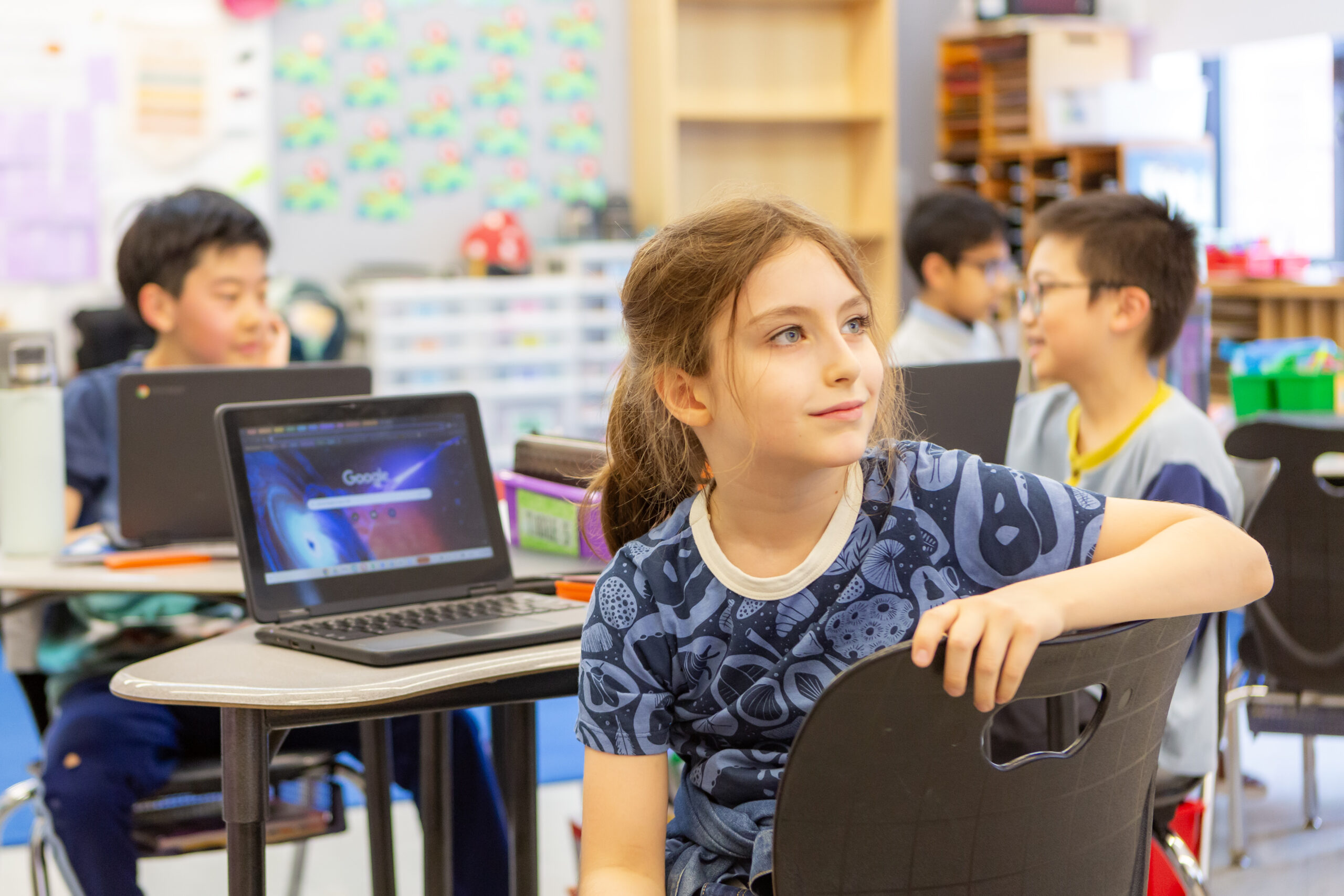
During Fifth Grade, students explore human origins, early migration patterns, and the development of civilizations in the ancient world. They explore how early nomadic societies evolved into settled agricultural societies in Mesopotamia and Egypt and study the Mesopotamian, Indus River Valley, Egyptian, and Greek civilizations. As they take on the role of historical detectives, students examine the themes and elements of what makes a society a civilization and study how in prehistory (history before writing) the narratives of history heavily rely on archeological evidence and artifacts. Emphasis is further placed on inferring and understanding interdisciplinary connections and the relationship of how history is portrayed in literature, the arts, and pop culture. Throughout the year, fifth graders acquire a hands-on understanding of ancient cultures in a variety of ways such as long-term projects (individual and group), field trips, and the performance of Greek plays staged by the students. Some of the literature they read includes: Because of Mr. Terupt, Gilgamesh the Hero, Sita’s Ramayana, Black Ships Before Troy (the retelling of The Iliad), and various Greek tragedies (Hecuba, Agamemnon, Iphigenia in Aulis).
In Sixth Grade, students learn about America from Colony to Empire, focusing on early expansion, manifest destiny, and expansion into the Pacific. Students analyze the characteristics of vast political entities, paying particular attention to their influence on the spread of cultural, intellectual, and technological innovation. They learn about the Byzantine Empire, both at the imperial level and level of the small village and move on to study the American Empire and American expansion. The sixth graders explore artists of the time such as John Gast, the impact of business and innovation on people within empires (Native Americans and immigrants), and the life of women in early America with particular focus on the restrictions placed upon them. A unique element of the sixth grade curriculum is their unit of study about whaling, which is directly tied to their science curriculum. Throughout the year, they read about and write about classic American works in literature such as The Veldt, To Kill a Mockingbird, Animal Farm, Of Mice and Men, Moby Dick, and Julius Caesar, in addition to a year-long study of classic American poetry.
A highlight of the Sixth Grade Humanities unit is their overnight whaling trip to Cape Cod. Whaling was one of the most important sectors of the economy in the United States in the decades before the Civil War. The sixth graders study American expansion and learn how whale oil both lit and lubricated the industrial development of the United States in the nineteenth century. Students spend two nights on Cape Cod, the heart of the American whaling industry. While there, they learn of the current efforts to rescue whales from entanglements and go on a whale watch out of Provincetown, MA.
The goal of Seventh Grade Humanities is for students to make important connections between historical events, the powerful philosophies and ideologies that prompted them into being, and the groundbreaking artwork, architecture, music, and literature that contextualizes the human experience. Through reading a variety of texts with multiple perspectives, students learn to annotate, summarize, analyze, and evaluate the past, as well as the ideas that brought about change. As they explore these themes, there is particular emphasis on whose history is told and whose is omitted as well as civics and the role of citizens within a government. They begin the year with the fall of the Roman Empire and then move on to explore the Middle Ages, the power of the Catholic Church, Humanism and the Renaissance, the Reformation, the Enlightenment, and the explosion of scientific advancements, struggles for freedom, and cultural conflicts that emerged along the way. Aside from historical references and texts, some of the books that are read include The Outsiders, Romeo and Juliet, Frankenstein, The Tempest, and Things Fall Apart, as well as the writings of the Enlightenment philosophers. Through their literature studies, the students analyze character motivation, discuss literary devices, understand and explain genre and narrative traits, explore vocabulary and diction, as well as connect to characters in order to better understand themselves. A highlight of the Seventh Grade curriculum is a Frankenstein-inspired Monster Madness Film Festival, where students explore and empathize with modern “monsters” and depict them in 1-3 minute films they write, film, and produce.
Students tackle questions that do not have an easy or “right” answer: What is history? How would you grade Reconstruction if the US was a student and what rubric would you use? Would I have helped with the Manhattan Project? How did the Holocaust happen? Students confront these difficult questions to develop empathy and become comfortable with ambiguity and the ability to say: I don’t know. They research and teach lessons (individually and in small teams) on the Constitution, the run-up to the Civil War, Reconstruction, WWII, the Holocaust, and advocacy. Students also write reflectively about themselves, deepening their metacognitive skills, in personal narrative, flash fiction, poetry, and other media that they may choose. As a final writing project, they read everything they had written this year and answered, “Who am I now?” Texts that students read may include The Absolutely True Diary of a Part-Time Indian, March, All Quiet on the Western Front, Maus, and Their Eyes Were Watching God. The year includes two highlights: a performance-based study of a work by William Shakespeare (previous plays that have been performed include Macbeth, The Tempest, and As you Like It) and a three-day field trip to Washington, D.C.
Our goal is that, at the end of their year, our Eighth Grade students will understand and apply empathy, become comfortable with complexity and ambiguity, and grow their sense of agency and responsibility. They will understand the importance of participating in history and the moral need to do so..
As students transition to Middle School, the curriculum introduces more complex research, variety of writing, and analytical skills, as well as an increased pace of literature studies (as noted in each grade’s Humanities description). Students progress through each grade building foundational skills and learning the craft of written communication by composing personal essays, expanding their vocabulary, and bolstering their skillful use of the mechanics of writing. Students engage with primary sources, interpret their significance, and employ them in composing analytical essays and presentations. Each grade builds on the next as students strengthen foundational grammar skills, writing mechanics, and written organization.
As they travel through the grades, there is an emphasis on the writing process, with a distinct focus on creating a thesis and developing it over a five-paragraph essay using textual and historical evidence to support ideas. As they learn skills such as close reading, annotating, taking notes, citations, writing from both primary and secondary sources, note-taking, and summarizing, they are empowered with strategies for higher-level academic writing. There is also a distinct focus on creative writing and crafting poetry, as well as personal essay writing, especially in Seventh and Eighth Grade as part of Speyer’s holistic approach to the exmissions process. This all culminates in the Eighth Grade Seminar class, where our soon-to-be graduates write a full research paper to prepare them for high school based around a close reading of a historical case developed at the Harvard Business School: David Moss’s case study, “James Madison, the ‘Federal Negative,’ and the Making of the U.S. Constitution.”